



Table of Contents
Home / Blog / Tokenization
A Complete Guide to Tokenizing and Securitizing Silver Legally in Europe

by

January 15, 2026

by
January 15, 2026
Tokenizing and securitizing silver in Europe represents a major shift in how precious metals integrate with modern finance. According to reports, the European tokenization market is poised to grow from roughly €789 million in 2023 to nearly $3.7 billion by 2032, reflecting strong institutional interest and regulatory momentum. At the same time, global silver demand reached about 1.21 billion ounces in 2024, driven by industrial, investment, and supply‑constrained dynamics.
To Tokenize Silver in Europe effectively, issuers must follow structured legal steps, align with evolving frameworks like MiCA, and manage risk, compliance, and market expectations. This article breaks down those requirements, best practices, and key considerations for compliant, robust asset digitization.
Ready to Bring Silver to the Digital Market?
Make your silver holdings more accessible to investors across Europe with professional tokenization services.
What Is the Tokenization of Silver?
Tokenization of silver refers to the process of converting ownership rights in physical silver into digital silver tokens recorded on a blockchain. Each token represents a defined quantity of silver, usually backed by vaulted, audited bullion. The token serves as a digital certificate of ownership, enabling fractional ownership, easier transfers, and improved liquidity compared to traditional physical silver holdings. The silver tokenization process provides a transparent and verifiable link between the digital token and the underlying asset, reinforcing trust for investors and regulators alike.
What Is the Securitization of Silver?
Securitization of silver involves pooling silver assets and issuing financial securities backed by those assets. These securities grant investors economic exposure to silver without direct ownership of the physical metal. The process follows established capital market structures, often using special purpose vehicles and regulated issuance frameworks. Securitization enables silver to function as a yield-generating or tradable financial instrument within traditional investment markets, in line with existing securities laws.
Benefits of Tokenizing and Securitizing Silver
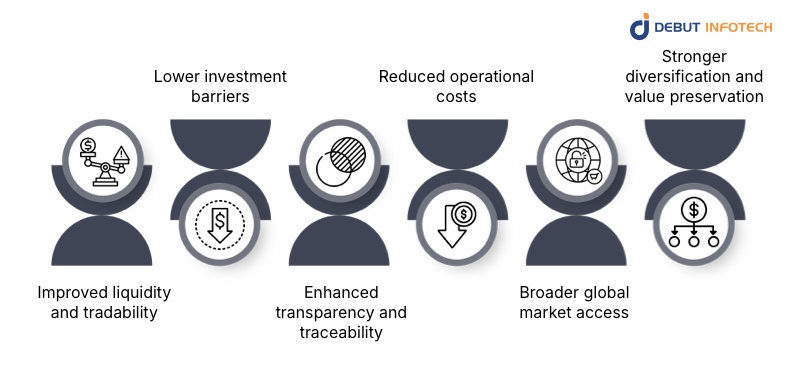
Tokenization and securitization introduce measurable advantages to silver markets. They include:
1. Improved liquidity and tradability
Tokenization and securitization significantly improve liquidity by breaking silver ownership into tradable digital or financial units. Investors can buy or sell fractional interests without handling physical bullion.
Faster settlement, continuous trading availability, and reduced reliance on intermediaries make silver more accessible, improving price discovery while supporting smoother entry and exit for both institutional and retail participants.
2. Lower investment barriers
By lowering minimum traditional silver investment thresholds, tokenization and securitization open silver markets to a broader investor base. Fractional ownership removes the need for bulk purchases, storage, or insurance arrangements. This structure supports portfolio diversification for smaller investors while allowing professional participants to allocate capital with greater precision and flexibility across different market conditions over varying economic cycles.
3. Enhanced transparency and traceability
Blockchain-based records introduce a high level of transparency to silver ownership and transactions. Each token or security is traceable, auditable, and verifiable against the underlying asset. This visibility reduces information asymmetry, strengthens investor trust, and supports regulatory oversight by providing clear, immutable records of issuance, transfers, and asset backing across platforms and jurisdictions over time.
4. Reduced operational costs
Operational efficiency is another clear advantage of tokenization of real world assets. Digital issuance and automated settlement reduce costs linked to custody, reconciliation, and intermediaries. Issuers benefit from streamlined administration, while investors avoid many traditional fees tied to physical handling. Over time, these efficiencies support more competitive pricing and improved scalability for silver-backed investment products across institutional and retail market segments.
5. Broader global market access
Tokenized and securitized silver products enable broader global participation without the logistical constraints of moving physical metal. Cross-border investment becomes simpler through standardized digital instruments. This structure supports international capital flows, improves market reach for issuers, and allows investors to gain silver exposure efficiently while operating within compliant and regulated frameworks across multiple jurisdictions and investor categories.
6. Stronger diversification and value preservation
Silver retains its historical role as a store of value, and tokenizing silver in Europe enhances its usefulness in modern portfolios. Investors gain exposure to precious metals alongside digital and traditional assets. This combination supports diversification strategies, risk management, and long-term allocation planning while preserving the defensive characteristics commonly associated with silver investments across economic cycles and inflationary environments.
Legal Framework for Tokenizing Silver in Europe
Europe approaches tokenized silver assets through a combination of financial regulation, securities law, and digital asset policy. Tokenized silver may fall under commodities regulation, financial instruments law, or crypto-asset frameworks, depending on its structure. The legal framework aims to protect investors, ensure market stability, and maintain financial transparency, while still allowing innovation within regulated boundaries.
European Regulations and Compliance
Compliance requirements are shaped by directives and regulations issued at the European level, including oversight by institutions such as the European Union and its financial supervisors. Regulatory clarity increasingly depends on whether tokenized silver qualifies as a financial instrument or a crypto-asset under emerging regulatory regimes. Issuers must align with capital market rules, disclosure obligations, and digital asset compliance standards applicable across member states.
Key Legal Considerations
1. Classification of the tokenized asset
Correct classification of tokenized silver determines the applicable regulatory regime. Depending on its structure, the token may qualify as a commodity-backed instrument, a security, or a regulated crypto-asset. This classification affects licensing requirements, disclosure obligations, investor eligibility, and ongoing compliance duties across European jurisdictions and markets.
2. Anti-money laundering (AML) and know-your-customer (KYC) regulations
AML and KYC compliance is mandatory for entities involved in tokenizing or securitizing silver. Issuers and platforms must verify investor identities, monitor transactions, and report suspicious activity. These controls help prevent financial crime, support regulatory confidence, and ensure tokenized silver products integrate safely into the broader financial system.
3. Intellectual property rights and data privacy laws
Tokenization platforms must address intellectual property ownership and data privacy obligations. Smart contracts, software code, and platform designs require proper licensing. At the same time, personal data processing must comply with European privacy laws, ensuring secure storage, lawful usage, and clear accountability for data handling throughout the asset lifecycle.
Steps to Tokenize Silver Legally in Europe
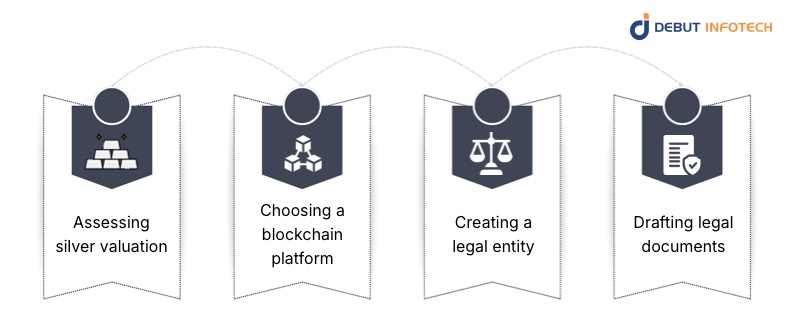
1. Assessing silver valuation
Assessing silver valuation begins with confirming purity, weight, and provenance through independent assay and custody verification. Market pricing should reference recognized benchmarks and include storage, insurance, and audit costs. A conservative valuation methodology protects token holders, supports redemption promises, aligns disclosures with regulatory expectations across European jurisdictions, and withstands regulatory review during licensing and ongoing supervision.
2. Choosing a blockchain platform
To tokenize Silver in Europe, choosing a blockchain development platform requires evaluating security architecture, scalability, compliance tooling, and auditability. Permissioned or hybrid networks often suit regulated assets, enabling access controls and reporting. The platform should support smart contracts, token standards, and integration with custody providers, while maintaining resilience, transparency, and long-term operational support, and clear upgrade paths aligned with evolving regulatory requirements.
3. Creating a legal entity
Creating a legal entity establishes a compliant issuer responsible for asset ownership, token issuance, and investor relations. The entity must select an appropriate jurisdiction, governance structure, and licensing approach. Clear segregation of assets, defined fiduciary duties, and robust internal controls help satisfy regulators and protect token holders throughout issuance and ongoing operations under applicable European financial law.
4. Drafting legal documents
Drafting legal documents formalizes rights and obligations for issuers and investors of silver investment tokens. Documentation typically covers asset backing, custody arrangements, redemption mechanics, risk disclosures, and dispute resolution. Clear, consistent language reduces ambiguity, supports regulatory approval, and improves investor confidence. These documents must align with securities, commodities, and digital asset rules and be reviewed periodically to reflect regulatory updates.
Steps to Securitize Silver in Europe
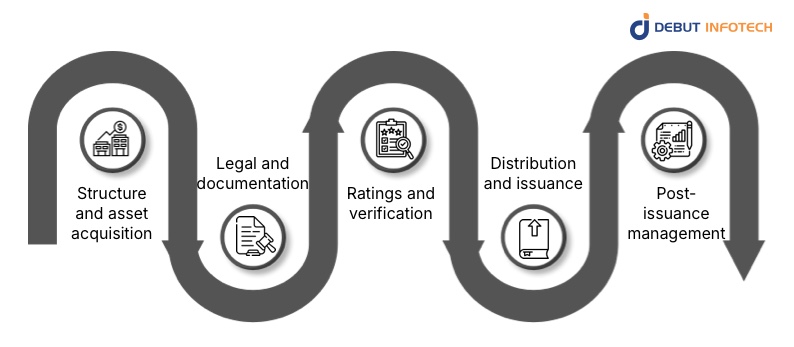
1. Structure and asset acquisition
Structuring and asset acquisition involve selecting eligible silver assets and transferring them into a dedicated vehicle. The structure must ensure bankruptcy remoteness and clear ownership. Secure custody, independent verification, and documented title protect investors. A well-designed structure supports regulatory approval and underpins the credibility of the securitized product while aligning risk allocation among all transaction parties.
2. Legal and documentation
Legal and documentation work defines the rights, obligations, and cash flow mechanics of the securitization. Offering memoranda, trust deeds, and servicing agreements must be precise and compliant. Strong documentation reduces legal risk, clarifies investor protections, and supports distribution through regulated markets and approved intermediaries across jurisdictions with varying securities law requirements and supervisory expectations.
3. Ratings and verification
Ratings and verification provide independent assurance on asset quality and structural integrity. Third-party audits confirm the existence, custody, and valuation of silver. Where applicable, credit assessments improve investor understanding of risk. Independent verification strengthens credibility, supports pricing accuracy, and facilitates acceptance by institutional investors and regulated distribution platforms subject to disclosure and ongoing review obligations by authorities.
4. Distribution and issuance
Distribution and issuance involve offering securitized silver instruments to eligible investors through compliant channels. Issuers must follow prospectus, marketing, and suitability rules. Proper onboarding, transparent disclosures, and regulated placement agents support orderly issuance. Controlled distribution reduces compliance risk and enhances investor confidence during primary and secondary market activity, in line with applicable securities supervision frameworks and reporting requirements.
5. Post-issuance management
Post-issuance management focuses on ongoing servicing, reporting, and asset maintenance. Administrators oversee cash flows, investor communications, and compliance obligations. Regular audits, performance updates, and custody confirmations maintain transparency. Effective post-issuance governance preserves trust, supports market liquidity, and ensures continued alignment with regulatory expectations throughout the lifecycle of the securitization programme, including amendments and refinancing events.
Risks and Challenges
1. Regulatory hurdles
Regulatory uncertainty remains a central challenge for silver tokenization and securitization. Asset classification, licensing scope, and cross-border recognition can differ across jurisdictions. Shifting regulatory guidance increases compliance complexity, slows approvals, and exposes issuers to enforcement risk if structures fail to align fully with evolving financial and digital asset regulations.
Recommendation or solution:
Early regulatory engagement and conservative legal structuring reduce uncertainty. Issuers should design products that clearly fit within existing frameworks, apply robust disclosures, and continuously monitor regulatory updates. Working with experienced legal advisors or RWA tokenization companies, and maintaining an open dialogue with supervisors supports smoother approvals and long-term compliance stability.
Related Read: Top 6 RWA Tokenization Challenges
2. Market volatility
Silver prices are subject to global supply, industrial demand, and macroeconomic factors, creating valuation volatility. Tokenized or securitized products may amplify short-term price movements by enabling faster trading and greater accessibility. This volatility can affect investor confidence, redemption behavior, and the perceived stability of digital silver investment or financial instruments.
Recommendation or solution:
Clear risk disclosures and conservative valuation models help manage volatility exposure. Issuers can implement transparent pricing mechanisms, redemption buffers, and stress-testing frameworks. Educating investors on silver’s price dynamics and positioning products for medium- to long-term allocation reduces reactionary behavior during market fluctuations.
3. Technological and smart contract risks
Blockchain infrastructure introduces technical risks, including smart contract vulnerabilities, system outages, and cybersecurity threats. Errors in code or platform governance can lead to asset loss, transaction failures, or operational disruption. These risks may undermine trust if investors perceive insufficient safeguards or inadequate incident response mechanisms.
Recommendation or solution:
Comprehensive technical audits and layered security controls are essential. Smart contract in tokenized silver should undergo independent testing and formal verification before deployment. Ongoing monitoring, controlled upgrade processes, and contingency planning strengthen resilience and demonstrate responsible operational management to regulators and investors alike.
4. Custody and operational risks
Custody failures pose significant risks, particularly where physical silver backing is unclear or poorly managed. Inadequate segregation of assets, weak governance, or operational lapses can compromise redemption rights. Such failures damage credibility and may trigger regulatory intervention or investor disputes if transparency standards are not consistently upheld.
Recommendation or solution:
Using reputable, independently audited custodians mitigates custody risk. Clear asset segregation, frequent physical audits, and public reporting strengthen confidence. Strong internal controls, defined accountability, and operational redundancy ensure continuity and protect investor interests throughout the lifecycle of tokenized or securitized silver products.
Looking For Expert Guidance for Tokenized Silver
Work with our team to navigate EU regulations and make silver tokenization simple and efficient.
Best Practices for Successful Tokenization and Securitization
1. Engaging legal experts
Engaging legal experts with experience across commodities, securities, and digital assets is critical. Specialist counsel helps structure compliant products, interpret evolving regulations, and manage cross-border requirements. Their involvement reduces legal uncertainty, supports regulator engagement, and ensures documentation, licensing, and disclosures remain aligned with applicable European financial and digital asset laws.
2. Ensuring transparency and security
Transparency and security underpin investor confidence. Regular audits should support clear disclosure of asset backing, custody arrangements, and valuation methods. Strong cybersecurity controls, secure smart contracts, and resilient infrastructure protect assets and data, reducing operational risk and reinforcing trust among regulators, partners, and market participants.
3. Marketing and communication strategies
Effective marketing and communication focus on clarity rather than promotion. Issuers should explain product structure, risks, and investor rights in plain, accurate language. Consistent messaging across channels supports informed decision-making, aligns expectations, and reduces reputational risk by avoiding overstatement or misunderstanding of tokenized or securitized silver offerings.
4. Proactive regulatory engagement
To Tokenize Silver in Europe, proactive engagement with regulators helps identify compliance expectations early. Open dialogue supports clearer interpretations of asset classification, licensing, and disclosure obligations. This approach reduces approval delays and limits enforcement risk. It signals a commitment to responsible innovation, thereby improving supervisory relationships and long-term operational stability across European markets.
5. Strong governance and operational controls
Robust governance structures ensure accountability throughout the product lifecycle. Transparent decision-making processes, segregation of duties, and internal controls reduce operational failures. Ongoing risk management, independent oversight, and documented procedures support resilience, investor protection, and sustained compliance as tokenized and securitized silver products scale and mature.
Bridging Physical Assets and Digital Markets
To Tokenize Silver in Europe, Debut Infotech brings practical execution to real-world asset tokenization by combining blockchain engineering with regulatory awareness.
As a top-tier asset tokenization development company, we support end-to-end tokenization workflows, from asset modeling and smart contract development to silver token development and compliance-ready platform design. Our experience with asset-backed digital solutions aligns well with precious metals tokenization, helping issuers convert physical silver into transparent, secure, and legally structured digital instruments designed for real-market use rather than experimentation.
Conclusion
Successfully navigating the legal and regulatory landscape is essential for any organization looking to Tokenize Silver in Europe. By following structured steps, adhering to compliance frameworks, and addressing risks through transparency and robust governance, issuers can unlock liquidity, broaden investor access, and ensure operational resilience.
Combining careful planning with expert guidance allows silver to be transformed into secure, tradable digital assets while maintaining full alignment with European legal standards.
FAQs
Q. What regulations govern silver tokenization in the EU?
Silver tokenization falls under EU financial and securities laws, mainly the Markets in Crypto-Assets (MiCA) regulation. It also touches anti-money laundering rules and investor protection guidelines. Rules can vary by country, so it’s smart to check local financial authorities before launching or investing in tokenized silver.
Q. Can individuals invest in tokenized silver in Europe?
Yes, individuals can invest in tokenized silver, but access depends on the platform and local regulations. Some platforms require verification and KYC checks. It’s essentially buying digital assets backed by physical silver, offering liquidity without handling the metal yourself. Still, you must ensure the provider is regulated.
Q. What are the tax implications of tokenizing silver in Europe?
Tax rules vary across Europe, but generally, gains from tokenized silver are treated like capital gains. Some countries may tax it as a financial instrument, while others may tax it as a precious metal. Always track transactions carefully and consult a tax advisor, as penalties for non-compliance can be steep if rules aren’t followed.
Q. How do I choose a platform to tokenize silver in Europe?
Look for platforms that are regulated, have transparent custody arrangements, and clear audit trails. Check fees, liquidity, and reputation. User reviews and third-party audits can reveal reliability. Platforms offering insured storage for underlying silver provide additional safety and confidence for investors.
Q. What risks are associated with tokenizing and securitizing silver in Europe?
Risks include platform failure, regulatory changes, and fraud. Tokenized silver depends on the issuer’s honesty and proper storage of the metal. Price volatility and liquidity issues can affect returns. Conduct due diligence, verify audits, and stick with regulated providers to reduce potential losses and complications.
Our Latest Insights


Leave a Comment