



Table of Contents
Home / Blog / Tokenization
The Role of Tokenization in the Internet of Value (IoV)

by

December 11, 2025
by
December 11, 2025
The Internet of Value (IoV) is transforming the flow of money, assets, and information on the digital networks. The internet, as we all know it, primarily facilitates the exchange of information but the IoV provides instant, secure and verifiable transfer of values between parties, be it in the form of money, real estate or even intellectual property. The core of this change is tokenization in Internet of Value, which transforms real or digital assets into tradable tokens, which is driven by blockchain technology.
This change in the direction of tokenized economies is opening the door to new possibilities in the fields of finance, supply chain, real estate and others. Blockchain tokenization allows the ownership of virtually any asset to be represented and will enable people to transfer or exchange value in any part of the world with minimum friction. With the expansion of the IoV ecosystem, the digital assets tokenization will become one of the most essential foundations of a digital economy with no borders.
Transform Your Assets into Digital Value
Leverage Debut Infotech’s expertise in blockchain technology to design secure and scalable tokenization systems for your business.
Understanding the Internet of Value (IoV)
The Internet of Value describes a digital infrastructure that enables the exchange of assets—such as currencies, securities, or goods—with the same ease as sending an email. This concept extends beyond financial transactions, encompassing ownership rights, access privileges, and resource sharing.
Unlike traditional systems that rely on intermediaries such as banks, clearinghouses, or notaries, the IoV utilizes blockchain technology and distributed ledger technology (DLT) to facilitate peer-to-peer transactions. Through blockchain interoperability protocols and cross-chain communication, the IoV connects multiple blockchains, creating a global network where digital and physical assets can move freely and securely.
At its core, IoV aims to democratize value exchange, breaking down barriers of geography, currency, and access. Tokenization plays the defining role in achieving this goal.
What is Tokenization?
Tokenization is the process of converting real-world or digital assets into tokens that exist on a blockchain. These tokens serve as digital representations of value, which can be traded, stored, or transferred securely without the need for intermediaries.
For example, a piece of artwork, a real estate property, or even gold can be represented as a tokenized asset on a blockchain network. Each token represents a specific share or ownership portion of that asset.
In simple terms, tokenization transforms tangible and intangible assets into programmable, tradable units, enabling frictionless transactions in the IoV ecosystem.
The Relationship Between Tokenization and the Internet of Value
The Internet of Value cannot function effectively without a system that allows the creation, transfer, and validation of assets in digital form—and that’s where tokenization steps in.
Through blockchain-based value exchange, tokenization provides the infrastructure that enables instant settlement, fractional ownership, and trustless transfers between users or systems. This means value can move as easily as data, creating a more efficient, inclusive, and transparent economy.
Some of the key roles tokenization plays in the IoV include:
- Digitizing real-world assets for global accessibility.
- Facilitating interoperability between financial systems.
- Automating transactions through smart contracts.
- Reducing transaction costs and delays by eliminating intermediaries.
- Enhancing liquidity in traditionally illiquid markets.
How Tokenization Works in Blockchain
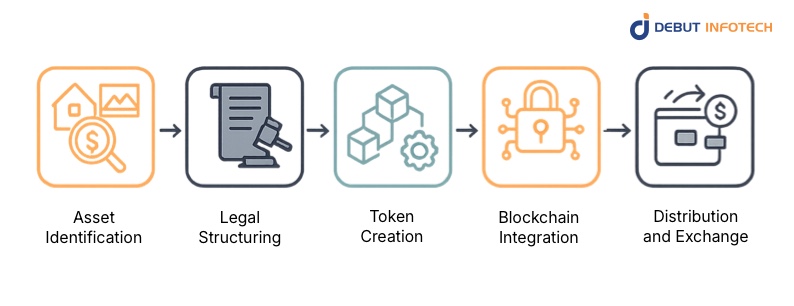
The process of tokenization in blockchain involves several key steps that ensure transparency, compliance, and scalability.
- Asset Identification: The process begins by determining which asset will be tokenized. This could range from tangible assets like real estate, gold, or art, to intangible assets such as equity, data, or intellectual property. The goal is to select assets that can benefit from increased liquidity, fractional ownership, or more effortless transfer through digital representation.
- Legal Structuring: Before issuing tokens, it’s essential to establish the legal and regulatory foundation. This includes defining ownership rights, setting compliance with securities laws, and ensuring that each token represents a legitimate and enforceable claim to the underlying asset. Proper legal structuring protects investors and ensures that the tokenised asset operates within recognised financial frameworks.
- Token Creation: Next, the tokens are created using smart contract automation on a chosen blockchain. These smart contracts define how tokens behave—how they’re issued, transferred, and redeemed. Depending on the asset and its use case, tokens can be either fungible (interchangeable, such as stablecoins or shares) or non-fungible (unique assets, such as collectables or property deeds).
- Blockchain Integration: Once generated, the tokens are recorded and secured on a blockchain network, ensuring immutability, transparency, and traceability. Each transaction related to the asset becomes part of the distributed ledger, minimizing fraud and enabling real-time verification of ownership and transaction history.
- Distribution and Exchange: In the final stage, tokens are distributed to investors or users and can be traded via tokenization platforms, white label tokenization platforms, or digital wallets. This opens up global access to previously illiquid assets, creating new opportunities for investment, liquidity, and financial inclusion within the Internet of Value ecosystem.
Through these steps, tokenization makes assets more accessible and tradeable across the IoV ecosystem, while maintaining ownership integrity through the blockchain’s immutable ledger.
Types of Tokenized Assets
- Asset-Backed Tokens: These tokens are backed by tangible or financial assets such as gold, real estate, or company shares. For instance, gold tokenization allows investors to purchase fractional ownership of physical gold stored in secure vaults.
- Utility Tokens: Utility tokens grant users access to products or services within a blockchain ecosystem. They are commonly used in decentralized apps (dApps) for transactions or governance.
- Security Tokens: Security tokens represent investment assets, such as equity, debt, or profit-sharing rights, and are often regulated under securities laws.
- Non-Fungible Tokens (NFTs): NFTs represent unique items, including artwork, intellectual property, and digital collectables.
Technical Foundations of Tokenization
- Distributed Ledger Technology (DLT): DLT serves as the backbone of tokenization, ensuring all participants have access to a synchronized, tamper-proof ledger of transactions.
- Smart Contract Automation: Smart contracts enable automatic execution of token-related actions such as transfers, dividends, or redemptions, based on predefined rules.
- Blockchain Interoperability Protocols: Since the IoV connects multiple blockchain networks, interoperability protocols ensure tokens can move seamlessly across chains.
- Cross-Chain Communication: This allows tokens issued on one blockchain to interact with other ecosystems, increasing their utility and liquidity.
Benefits of Tokenization in the Internet of Value
- Enhanced Liquidity: Tokenization transforms illiquid assets like real estate or fine art into divisible, tradable units. This boosts market participation and enables fractional investment opportunities.
- Lower Transaction Costs: By eliminating intermediaries, tokenization reduces transaction fees and settlement times, improving operational efficiency.
- Global Accessibility: Investors from any location can access tokenized assets, promoting financial inclusion and market expansion.
- Transparency and Trust: Blockchain’s immutable record ensures every transaction is traceable and verifiable, strengthening trust between participants.
- Fractional Ownership: Tokenization allows users to own portions of high-value assets, democratizing investment access.
- Programmability and Automation: With smart contract automation, actions such as revenue sharing or asset transfers occur automatically, enhancing efficiency.
The Evolution of Tokenization within the IoV Ecosystem
As the IoV ecosystem matures, tokenization has evolved beyond financial assets into new sectors and use cases. The combination of blockchain, IoT, and Web3 infrastructure has broadened how digital value is represented and exchanged.
Some key phases in tokenization’s evolution include:
- Initial Coin Offerings (ICOs): The early phase of blockchain fundraising, where tokens represented access to new platforms.
- Security Token Offerings (STOs): Regulated digital securities ensuring compliance and investor protection.
- Non-Fungible Tokens (NFTs): Enabled the representation of unique, non-replicable digital assets.
- Real-World Asset Tokenization: The latest trend enabling ownership of tangible assets like real estate, commodities, or even patents.
The growing role of tokenization companies and asset tokenization development companies has accelerated this transition, making tokenized ecosystems more mainstream and scalable.
Real-World Applications of Tokenization
Tokenization is transforming how assets are owned, traded, and managed. By converting physical and digital assets into blockchain-based tokens, it creates new opportunities for liquidity, accessibility, and transparency across industries.
- Real Estate Tokenization: Tokenization allows properties to be divided into digital shares, enabling multiple investors to co-own real estate. This lowers entry barriers, simplifies ownership transfer, and brings liquidity to traditionally illiquid markets like commercial and residential real estate.
- Gold and Commodity Tokenization: Through gold tokenization, investors can own fractional shares of physical gold or other commodities stored securely. It combines the stability of tangible assets with the efficiency of digital trading, removing the need for complex storage and logistics.
- Financial Instruments: Bonds, stocks, and derivatives are increasingly being tokenized to enable faster settlements and improved transparency. This reduces intermediaries, lowers costs, and allows for global, 24/7 trading of traditionally restricted financial assets.
- Supply Chain and Trade Finance: Tokenized assets in supply chains represent goods in transit, offering real-time tracking and verification. This improves transparency, minimizes fraud, and accelerates trade finance processes by digitizing invoices and proof of ownership.
- Intellectual Property and Royalties: Artists and creators can tokenize their work, offering investors fractional ownership in future royalties. This ensures transparent royalty distribution and provides creators with immediate liquidity without giving up full rights to their creations.
These blockchain use cases reflect the broader shift toward an economy built around tokenization in blockchain, where every form of value becomes exchangeable through digital means.
Challenges and Considerations
Despite its vast potential, tokenization in the IoV faces several challenges that must be addressed to ensure long-term sustainability.
- Regulatory Uncertainty: Clear frameworks are still emerging for defining how tokenised assets are legally treated, particularly across different jurisdictions.
- Technical Complexity: Building tokenization systems requires expertise in blockchain interoperability protocols and smart contract development, which not all organizations possess.
- Security and Custody: Secure storage and management of tokens, especially asset-backed tokens, remain crucial to prevent losses.
- Integration with Traditional Finance: Bridging blockchain-based value systems with conventional banking requires collaboration and innovation in cross-chain communication and compliance mechanisms.
To overcome these issues, organizations often partner with blockchain consultants or a blockchain development company experienced in designing secure, compliant tokenization frameworks.
Tokenization Platforms and Industry Solutions
The growing demand for asset tokenization has led to the rise of white label tokenization platform(s) and Tokenization as a Service solutions. These platforms offer ready-to-deploy infrastructure that businesses can customize to issue, manage, and trade tokens without building from scratch.
A reliable asset tokenization development company provides:
- End-to-end token design and issuance.
- Integration with blockchain and Web3 networks.
- Compliance and KYC/AML solutions.
- Custodial and wallet infrastructure for token management.
- Scalability for enterprise blockchain development projects.
Such solutions are reshaping industries, making it easier for companies to digitize assets and participate in the Internet of Value economy.
Tokenization Strategy for Businesses
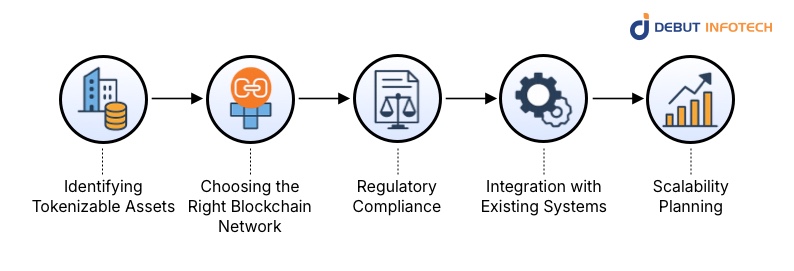
For enterprises exploring tokenization, having a well-defined tokenization strategy is critical. It should align technological, regulatory, and business objectives to ensure smooth deployment and adoption.
Below are the essential steps to consider:
1. Identifying Tokenizable Assets
The first step is to determine which assets—whether physical, like real estate, commodities, or equipment, or digital, like data, IP, or financial instruments—offer the highest tokenization potential. This involves evaluating asset liquidity, market demand, and value stability to ensure that tokenization adds measurable business and investment benefits.
2. Choosing the Right Blockchain Network
Selecting the right blockchain is critical for long-term scalability and efficiency. The chosen network should support high transaction throughput, security, and interoperability with other systems. Platforms designed for blockchain-based value exchange and smart contract automation ensure smooth token issuance, transfer, and management within the IoV ecosystem.
3. Regulatory Compliance
Adhering to local and international regulations is non-negotiable in tokenization. Businesses must ensure that tokenized assets meet securities, KYC/AML, and data privacy laws. Collaborating with blockchain consultants or legal experts helps design compliant frameworks that protect both investors and issuers.
4. Integration with Existing Systems
For enterprises, tokenization must fit seamlessly within existing infrastructure. Integrating with legacy financial systems or ERP software through APIs, middleware, or blockchain bridges allows organizations to synchronize real-world operations with tokenized asset data—ensuring accuracy and operational continuity.
5. Scalability Planning
As tokenized ecosystems grow, scalability and cross-chain interoperability become essential. Implementing blockchain interoperability protocols and cross-chain communication layers early on ensures flexibility for future expansion. This allows assets and value to move seamlessly across networks as the broader Internet of Value continues to evolve.
Organizations can collaborate with top tokenization companies or blockchain consultants to implement these strategies effectively.
Debut Infotech: Empowering the Internet of Value Through Tokenization
As a leading blockchain development company, Debut Infotech has been at the forefront of designing and deploying scalable tokenization solutions that support the Internet of Value. With deep expertise in enterprise blockchain development, our team helps businesses turn tangible and digital assets into programmable, tradable forms.
From Real World asset tokenization to smart contract automation, Debut Infotech delivers end-to-end services that power secure, compliant, and future-ready ecosystems. Our team also specializes in building white label tokenization platforms and tailored Tokenization as a Service solutions that accelerate business innovation and digital transformation.
Whether you’re planning to launch tokenized investment products or digitize your business assets, Debut Infotech ensures your project is built on robust technology and guided by a clear tokenization strategy.
Build a Future-Ready Tokenization Platform
Partner with Debut Infotech—your trusted asset tokenization development company—to lead innovation in the Internet of Value.
Conclusion
The Internet of Value marks a fundamental shift in how the world perceives and exchanges value. Through tokenization in blockchain, it becomes possible to transform assets—both physical and digital—into tradable digital forms that can circulate freely and securely. This evolution promises not just faster and cheaper transactions but also a more inclusive financial system where anyone can participate in global value creation.
As we move toward a future defined by blockchain interoperability, smart contract automation, and Web3 infrastructure, tokenization will remain the cornerstone of the IoV ecosystem. Companies like Debut Infotech continue to drive this transformation, providing innovative tokenization frameworks and blockchain-based solutions that redefine what it means to exchange value in the digital era.
Frequently Asked Questions
Q. What is blockchain technology in the energy sector?
Blockchain technology in the energy sector refers to using decentralized digital ledgers to record and verify energy transactions. It enhances transparency, efficiency, and security in energy trading and management.
Q. How does blockchain improve energy trading?
Blockchain allows peer-to-peer energy trading without intermediaries. This enables consumers and producers to directly buy or sell renewable energy, ensuring faster transactions and fair pricing.
Q. Can blockchain help reduce energy fraud?
Yes. Blockchain creates tamper-proof records of all transactions, making it nearly impossible to manipulate energy data or engage in billing fraud.
Q. What are the main benefits of blockchain in renewable energy?
Key benefits include transparent energy tracking, real-time grid management, reduced operational costs, and secure decentralized energy exchanges.
Q. Which companies are currently using blockchain in energy management?
Several global companies like Power Ledger, WePower, and Electron are integrating blockchain into their energy platforms to promote transparency and clean energy adoption.
Q. What challenges does blockchain face in the energy industry?
Scalability, regulatory compliance, and integration with existing energy infrastructure remain major challenges for blockchain adoption in this sector.
Q. How can Debut Infotech help implement blockchain in energy solutions?
Debut Infotech offers end-to-end blockchain development services tailored for the energy industry. Their expertise helps companies create secure, efficient, and transparent systems for trading, grid management, and renewable energy tracking.
Our Latest Insights


Leave a Comment