



Table of Contents
Home / Blog / Tokenization
Top Industrial Metal Tokenization Trends Investors Need to Track

by

January 7, 2026

by
January 7, 2026
The industrial metals market is undergoing a noticeable transition as metal tokenization moves from isolated trials to a structured, investable segment backed by clearer standards and rising institutional attention. Investors are seeking stronger verification, improved sourcing data, and easier entry into markets that once required high capital and complex logistics.
A global study by EY shows that 44% of institutional investors already hold or expect to hold tokenized assets, with many expanding digital-asset teams to support that shift.
Broader projections from Boston Consulting Group estimate real-world asset tokenization could reach $16 trillion by 2030, driven by commodities, real estate, and supply-chain assets gaining on-chain demand.
As liquidity models improve and compliance frameworks become clearer, understanding the top trends and what investors should watch helps reveal how tokenized metals are developing and where stronger long-term opportunities may emerge.
Launch Your Own Metal-Backed Tokens
From smart contracts to custody integration, we handle the build so you can focus on investors.
Overview of Metal Tokenization
Metal tokenization brings physical commodities into a digital format backed by blockchain records. This structure gives industrial metals a verifiable identity, improves settlement efficiency, and broadens access for investors who previously needed large capital outlays or trusted intermediaries.
The approach introduces operational clarity around ownership and custody, allowing market participants to handle metals with the same confidence they apply to other regulated assets. As the technology matures, tokenization is gradually shaping a more orderly system for verification, storage, and transfer.
Top Trends in Tokenized Industrial Metals
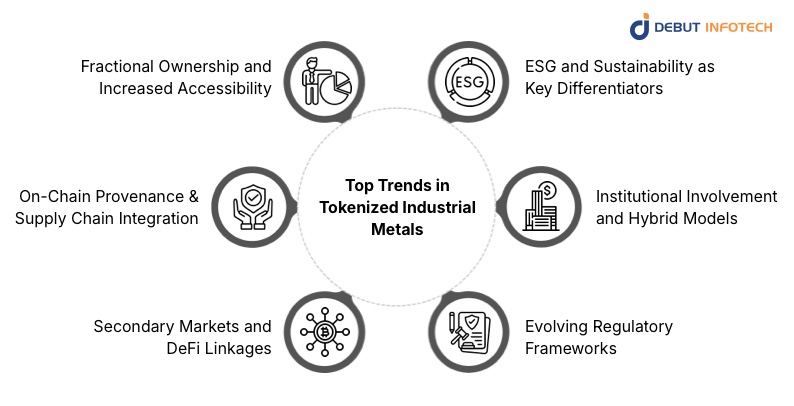
1. Fractional Ownership and Increased Accessibility
Fractionalized tokens reduce the capital barrier to industrial metals and allow investors to participate without storing or transporting the physical asset. This structure suits retail and institutional profiles that want flexible exposure while avoiding logistics.
It also supports more diverse market engagement, encouraging frequent trading and easier portfolio adjustments across global platforms with reliable custody integration.
2. ESG and Sustainability as Key Differentiators
ESG reporting is becoming a deciding factor for many investors, and metal tokenization makes those details easier to track and verify. Issuers can attach energy data, social standards, and governance metrics directly to the token. This improves clarity, reduces doubts around sourcing claims, and helps investors align purchases with responsible production goals backed by verifiable information.
3. On-Chain Provenance and Supply Chain Integration
On-chain records connect each stage of a metal’s lifecycle—mining, refining, storage, and release—into one verifiable trail. This prevents data gaps and strengthens accountability among suppliers. Integrated tracking also helps regulators and institutional buyers review quality and origin without relying on siloed databases, creating a cleaner, more predictable framework for cross-border industrial metal transactions.
4. Institutional Involvement and Hybrid Models
Large institutions are moving toward hybrid structures that combine regulated warehouses with blockchain-based ownership units. This approach lets them maintain compliance while improving distribution and settlement efficiency. Once institutional custodians validate tokenization workflows, broader adoption across asset managers, trading desks, and commodity funds becomes more likely, enabling smoother operational processes without abandoning existing regulatory safeguards.
5. Secondary Markets and DeFi Linkages
Tokenized metals are now connecting to lending pools, collateral frameworks, and structured financial products. These integrations allow holders to use their metal tokens for borrowing, hedging, or passive yield strategies. As platforms refine their risk controls, these linkages help position metal-backed tokens as active financial instruments rather than simple digital receipts tied to warehouse storage.
6. Evolving Regulatory Frameworks
Regulators are refining classifications, custody standards, and disclosure rules for tokenized commodities. Clearer frameworks help issuers design compliant products that align with existing commodity and securities regulations. As authorities finalize rules, it encourages institutional confidence, reduces uncertainty around redemption procedures, and shapes a more stable environment for both cross-border issuance and secondary market trading.
Related Read: How to Reduce Risk Management in RWA Tokenization
What Investors Should Watch
1. Underlying Asset Validation
Investors need confidence that the physical metal exists, is stored in approved facilities, and is matched accurately to each token. Regular third-party audits, tamper-proof documentation, and clear redemption channels reduce uncertainty.
Tokenization platforms that maintain transparent reporting and allow independent verification tend to inspire stronger trust and deliver smoother long-term performance.
2. Liquidity and Trading Volume
A token’s value depends on how easily holders can trade it without large price swings. Strong order books, multiple exchange listings, and reliable settlement processes all reduce friction. Broader participation from both retail and institutional players improves liquidity depth, giving investors confidence they can adjust positions without unnecessary cost or delay.
3. Regulatory Compliance and Jurisdiction
Tokenized precious metals are subject to varying rules by country, affecting custody, disclosure, and redemption rights. Investors should understand the jurisdiction governing the token, as well as its licensing status and compliance standards.
Metals investment projects aligned with well-defined regulatory systems generally offer more predictable safeguards and stronger legal protection for asset holders.
4. Market Volatility and Macro Tailwinds
Industrial metals react to manufacturing trends, geopolitical shifts, inventory changes, and monetary policy cycles. Tokenization doesn’t remove these pressures, but it gives investors a flexible way to manage exposure. Monitoring global demand indicators and macro signals helps investors enter or exit positions with better timing and a clearer understanding of market direction.
5. Technological and Security Risks
Smart contract vulnerabilities, custody breaches, or operational failures can undermine tokenized metal platforms. Investors benefit from reviewing security audits, insurance coverage, and incident-response procedures. Platforms that adopt rigorous testing standards and transparent operational frameworks provide stronger protection and reduce the likelihood of disruptions that could affect token holders.
Environmental and Ethical Implications of Tokenized Metals
1. Traceability & Transparency
Tokenization of real world assets records every stage of a metal’s journey on an immutable ledger, allowing buyers, regulators, and supply-chain partners to verify sourcing and movement without relying on fragmented databases. This reduces information gaps, limits mislabeling, and provides stakeholders with a clearer view of whether the metal meets environmental, social, and operational standards for responsible production.
2. Extraction Footprint
Mining activity affects land, water, biodiversity, and energy consumption. Tokenization allows producers to attach detailed environmental metrics to each token, helping investors understand the footprint associated with the underlying material. This encourages producers to adopt cleaner extraction methods, since environmental performance becomes visible and directly tied to the marketability of the tokenized asset.
3. Recycling & Circular Flows
Recycled metals are playing a growing role in reducing the impacts of extraction. Tokenization supports this shift by assigning verifiable records to reclaimed materials, ensuring buyers know whether a metal originates from primary or secondary sources. This clarity strengthens circular-economy efforts, promotes higher recycling rates, and reinforces sustainable practices across the industrial metals ecosystem.
4. Carbon-Credit Linkages
Some tokenization platforms integrate carbon offsets into the asset structure, linking environmental performance directly with market value. This gives producers a consistent method to document emission-reduction efforts and helps investors assess climate alignment more accurately. When implemented correctly, it bridges commodity trading with documented decarbonization initiatives supported by verifiable data.
5. Responsible Sourcing
Tokenized assets can include certificates, inspection results, and origin tags that reveal whether metals came from operations with fair labor conditions and proper oversight. This helps investors avoid materials linked to unsafe practices or conflict regions. Better visibility encourages producers to follow stronger standards, creating commercial incentives for ethical sourcing across global supply chains.
6. Community Alignment
Mining regions depend on stable labor conditions, fair compensation, and transparent agreements. Tokenization enables issuers to display commitments, such as community royalties or local development contributions, directly within the digital record. This builds trust, reduces disputes, and creates a clearer link between extraction revenues and the people living around production sites.
7. Inclusive Access
Tokenized metals allow smaller investors and local buyers to participate without meeting high minimums or managing physical storage. This broadens access to commodity markets that were once limited to large players. Greater inclusion supports fairer participation and encourages issuers to create transparent systems that appeal to a broader and more diverse user base.
8. Governance and Redemption Rights
Clear governance rules help token holders understand their rights around redemption, dispute resolution, and changes to token structures. Strong frameworks reduce conflicts and prevent uncertainty around access to the physical metal. Platforms that prioritize open communication and verifiable documentation often deliver more predictable outcomes and reinforce long-term market confidence.
Also Read: Ongoing Costs After Launching a White Label Tokenization Platform
Risks in Metal Tokenization and How to Prevent Them
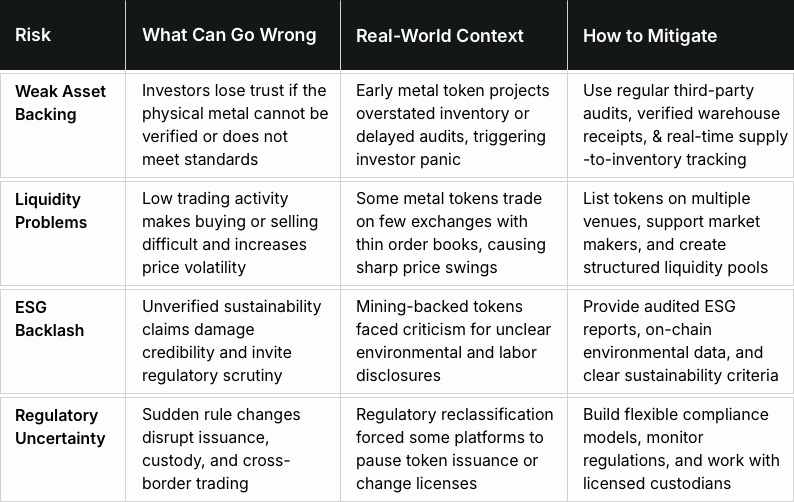
1. Weak Asset Backing
Weak asset backing raises doubts about whether the physical metal exists in the stated quantity or meets the required standards. This uncertainty undermines trust, reduces investor participation, and can trigger sudden sell-offs when storage or verification records appear unreliable.
Real-World Context
Some early custom metal token projects overstated inventory or delayed audit disclosures, causing panic among holders who couldn’t confirm whether the underlying metal was stored securely or accounted for accurately.
How to Mitigate
Platforms should commission regular third-party audits, maintain verifiable warehouse receipts, and integrate automated reconciliation between token supply and inventory records. Public dashboards showing storage data strengthen transparency and reduce concerns around asset integrity and custody accuracy.
2. Liquidity Problems
Low liquidity makes it difficult for investors to exit or expand positions without significant price slippage. Poor market depth limits confidence, reduces trading activity, and weakens the token’s practical utility in both investment and collateralized use cases.
Real-World Context
Some commodity-backed metal tokens trade on limited exchanges with thin order books, creating situations in which sizable trades can shift prices sharply and discourage ongoing participation by institutions.
How to Mitigate
Tokenization companies or platforms can list tokens on multiple venues, support credible market makers, and establish structured liquidity pools. Incentivized trading programs and reliable settlement frameworks help improve accessibility and create a more stable marketplace for long-term holders.
3. ESG Backlash (Greenwashing)
False or exaggerated sustainability claims erode credibility and can trigger public criticism, regulatory pressure, and investor distrust. When ESG statements lack evidence, tokenized metal projects appear misleading, weakening brand reputation and long-term adoption prospects.
Real-World Context
Some mining-linked digital assets have faced scrutiny when environmental data was vague or unverifiable, raising questions about energy use, labor conditions, and whether ESG labels matched reality.
How to Mitigate
Platforms should provide verifiable ESG documentation, include certification from recognized auditors, and embed environmental metrics directly on-chain. Transparent reporting cycles and clear criteria for sustainability claims help prevent misinterpretation and protect market credibility.
4. Regulatory Whiplash
Rapid regulatory shifts can disrupt token operations, affecting custody rules, redemption procedures, and cross-border trading. Uncertainty discourages institutions, limits market expansion, and exposes platforms to sudden compliance costs that strain operations.
Real-World Context
Jurisdictions have revised digital-asset classifications with little notice, forcing commodity-backed token providers to halt issuance, modify documentation, or adjust licensing requirements to maintain legal standing.
How to Mitigate
Platforms should build flexible compliance frameworks, maintain active monitoring of global regulations, and structure a metal token network using legally recognized commodity models. Working with licensed custodians and legal advisors ensures adaptability when rules shift.
Partner With an Expert Blockchain Team
Work with remote developers who know tokenization inside out and can deliver a secure, production-ready metals platform.
Why Now Is the Right Time for the Metal Industry to Launch a Custom Tokenization Platform
1. First-Mover Opportunity in a Less-Crowded Niche
Industrial metals remain early in their tokenization cycle, creating room for firms to establish trusted platforms before competitors scale. Building now positions companies as foundational players, shaping standards and capturing demand from investors seeking regulated, transparent access to commodity-backed digital assets.
2. Branding and Monetization Opportunities
Tokenization creates new revenue streams through distribution fees, digital custody partnerships, and value-added services. It also strengthens brand presence by linking a company’s name to verifiable, high-quality assets. Early adopters can build a strong market identity while expanding commercial channels within global commodity and fintech networks.
3. Vertical Integration and Value-Chain Extension
A custom white label tokenization platform lets producers manage certification, ownership transfers, and settlement in one ecosystem. This reduces dependency on intermediaries and gives companies greater control over pricing and customer relationships. It also supports seamless coordination across storage, logistics, and verification processes tied to each physical batch of metal.
4. Global Reach and Liquidity Extension
Tokenized metals can be traded across borders without the delays linked to physical shipments or paper documentation. This expands the pool of potential buyers and improves liquidity. It also allows companies to participate in global capital flows while offering investors easier access to standardized, verified commodities.
5. ESG-Driven Investor Appetite equals Market Pull
Investors increasingly favor assets or metal businesses with transparent sourcing and clear environmental reporting. Tokenization delivers both through verifiable on-chain data. Companies that adopt this model now can meet rising demand for responsible commodities and position their metals as reliable, traceable options for sustainability-focused portfolios.
Why Choosing the Right Metal Tokenization Development Partner Matters?
Selecting the right development partner determines how secure, scalable, and compliant your metal tokenization platform becomes. A trusted asset tokenization development company brings technical depth, industry understanding, and a structured roadmap that avoids costly missteps.
Debut Infotech offers purpose-built blockchain architectures, audit-ready asset-tracking systems, and long-term support frameworks tailored to the industrial metals industry. Our approach helps issuers launch platforms that inspire investor confidence, meet regulatory requirements, and integrate seamlessly into global trading environments.
Why we are a strong choice:
- Proven expertise in commodity and asset-backed tokenization
- Secure smart-contract engineering with audit support
- End-to-end asset lifecycle tracking and integration capabilities
- Compliance-focused workflows aligned with global regulations
- Scalable architectures designed for institutional-grade performance
Conclusion
Investors tracking tokenized commodities have a clear advantage when they understand how digital ownership is reshaping access to industrial metals. Supply-chain transparency, stronger custody standards, and smoother trading rails are pushing this shift forward.
The appeal grows as more platforms back tokens with audited, real-world reserves, giving investors a cleaner way to hold metals without storage headaches. As adoption rises, metal tokenization stands out as a practical route for both diversification and long-term exposure to assets that continue to anchor global manufacturing.
FAQs
Q. Which metal will be expensive in the future?
Copper keeps getting the most buzz since everything from EVs to data centers needs it. Supply hasn’t kept up with demand, so prices are set to climb. Nickel and lithium also look strong as clean-energy tech expands, but copper remains the safest long-term call.
Q. What is the best metal to invest in right now?
Copper is the most balanced pick because it has real-world demand and a solid long-term outlook. Aluminum and nickel are also interesting if you’re watching clean-tech growth. If you want something even steadier, tokenized gold works well, but copper offers the best mix of stability and upside.
Q. Which platforms are leading the adoption of metal tokenization?
Platforms like Paxos, MetalX, and a few emerging institutional-grade tokenization players are gaining traction. They offer audited reserves, stable infrastructure, and easier on-chain settlement. More exchanges and custodians are also rolling out tokenized metal products. Hence, investors now have options that feel far more accessible than before.
Q. How do tokenized metals differ from traditional commodity-backed assets?
Tokenized metals live on-chain, so ownership transfers instantly and comes with built-in transparency. Traditional commodity assets move more slowly, rely on intermediaries, and often involve more paperwork. With tokens, you get fractional access, faster liquidity, and clearer proof that each token maps to real metal held in storage.
Q. How do regulations impact tokenized industrial metals?
Regulations set the guardrails for custody, audits, and investor protections. Clear rules make tokenized metals more trustworthy, while unclear rules slow adoption because platforms tread carefully. Most regulators are still catching up, so the space moves forward, but with extra scrutiny to keep everything compliant and above board.
Our Latest Insights


Leave a Comment