





TRUSTED BY BUILDERS BEHIND
iFinca
OKX
NDAX
IntegraLedger
RVA
PRC
KoreConx
Everledger
20+
Blockchain Platforms Supported

150+
Complex Technology Engagements

50+
Blockchain & Digital Asset Implementations

100+
Engineers Across Distributed Systems & Security

The Hard Problems Most Web3 Development Companies Won't Tell You About
Building on blockchain isn't a development project — it's a financial infrastructure build. The challenges below are where most web3 projects fail, get exploited, or stall. Debut Infotech has engineered solutions for every one of them across 50+ shipped projects.

Smart Contract Vulnerabilities
THE CHALLENGE
Reentrancy attacks, integer overflows, flash loan exploits, and oracle manipulation have drained billions from protocols whose contracts were written without adversarial thinking. A single unaudited function can wipe an entire protocol.

Our Fix
Mandatory CertiK/Hacken audit + Foundry fuzz testing on every contract before deployment

Gas Cost Scalability
THE CHALLENGE
On-chain operations that cost $0.50 at launch become $40+ during peak network congestion — pricing out retail users and making your protocol economically unviable at the exact moment it gains traction.
Our Fix
Assembly-level gas optimization reducing average costs by 30–50% before mainnet

Cross-Chain Fragmentation
THE CHALLENGE
Building on a single chain limits your user base to that chain's ecosystem. Cross-chain bridges introduce new attack surfaces — $2B+ has been lost to bridge exploits. Most "multi-chain" solutions are just multiple deployments duct-taped together.
Our Fix
Native LayerZero / CCIP integration with fraud proof testing before bridge deployment

Regulatory Uncertainty
THE CHALLENGE
MiCA, VARA, FinCEN, and SEC guidance changes monthly. Protocols built without compliance architecture face retroactive redesign costs — or shutdown. Most web3 dev shops treat compliance as a legal problem, not an engineering one.
Our Fix
Compliance architecture embedded at the protocol layer — KYC/AML built into transaction flows, not added later

Liquidity Bootstrap Problem
THE CHALLENGE
An exchange with no liquidity is an empty order book. A DeFi protocol with no TVL earns no fees. More web3 launches fail from empty order books than from technical failures. Liquidity strategy is an engineering problem, not just a business development one.
Our Fix
Liquidity infrastructure designed before mainnet — market maker API integration, AMM seeding, and aggregator connectivity

Web3 UX vs Web2 Expectations
THE CHALLENGE
Wallet connection flows, gas approval dialogs, and transaction finality delays lose 60–80% of new users before they complete their first action. Most web3 frontends are built by smart contract developers who have never worked on consumer product UX.
Our Fix
ERC-4337 account abstraction, gasless meta-transactions, and user-tested onboarding flows built for non-crypto users
Why Building on Web3 Now Is a Structural Imperative
Web3 adoption is moving beyond experimentation into measurable growth across users, capital, and infrastructure. Market data shows strong momentum, with enterprises and startups actively investing in blockchain-driven systems that deliver real operational value

Explosive growth trajectory (GVR)
Grand View Research projects that the global blockchain will grow at 90.1% CAGR from 2025 to 2030, driven by enterprise adoption, DeFi expansion, and tokenization. Industries like finance, logistics, and identity are moving from pilots to production-level deployments.

Massive market size (MarketsandMarkets)
MarketsandMarkets estimates blockchain will clock $393.45 billion by 2030, fueled by enterprise spending across payments, compliance, and supply chains. Businesses are adopting blockchain to reduce costs, automate processes, and improve operational transparency.

Stablecoins moving real money (McKinsey)
McKinsey & Company reports that stablecoins process up to $35 trillion in annual on-chain transaction volume, with an estimated $390 billion representing real payment activity in 2025. This shows both massive scale and growing real-world usage across settlements, remittances, and liquidity movement.

Growing user base (Web3 adoption)
Industry data from TripleA estimates 560M+ global crypto users, many actively interacting with wallets, DeFi, NFTs, and Web3 apps. This reflects a rapidly expanding user layer beyond developers, with increasing participation in real-world financial and digital use cases.
Key Market Insights for Launching a Web3 Platform

United States — Capital & User Dominance
The United States leads global Web3 activity, accounting for a large share of crypto developers and startups, alongside billions in venture funding. It also ranks among the top countries for adoption, with millions of users engaging across DeFi, NFTs, and on-chain applications.

United Kingdom — Rising Web3 Adoption
In the United Kingdom, around 10% of adults have owned or used crypto assets, reflecting steady Web3 adoption. London continues to grow as a blockchain hub, supported by regulatory initiatives and increased participation across financial and digital asset platforms.

European Union — Structured Web3 Growth
The European Union is advancing Web3 adoption through the MiCA framework, covering 450M+ citizens. This regulatory clarity is encouraging the use of digital wallets, tokenized assets, and blockchain-based identity systems across financial services and enterprise applications.

UAE — High Adoption & Crypto Usage
The United Arab Emirates has one of the highest crypto adoption rates globally, with 25%+ of residents owning digital assets. Strong government backing and clear licensing frameworks continue to attract Web3 startups, exchanges, and DeFi platforms into the region.
Turn Market Momentum into Your Advantage
The signals are clear. Adoption is rising, capital is flowing, and users are already active. The next step is execution.

Choose the Right Web3 Development Model for Your Project
Web3 platforms do not operate as standalone applications. They rely on smart contract layers, on-chain liquidity systems, identity and compliance frameworks, and real-time state management. Our web3 development services bring these components together through delivery models tailored to every project type.
DeFi DApp Development Services
DeFi DApp Development Services
Audited decentralized finance protocol development — DEXs, lending markets, yield aggregators, liquid staking, and AMM architectures built for institutional TVL and retail volume simultaneously.
- AMM, CLOB, and hybrid order book architecture
- Concentrated liquidity pools with fee-tier optimization
- Oracle integration — Chainlink, Pyth, TWAP
- Governance-ready with DAO upgrade paths
Best suited for protocol founders, DeFi startups, and institutions entering on-chain finance.
Web3 Game Development Company
Web3 Game Development Company
As a leading web3 game development company in USA, we build play-to-earn, move-to-earn, and GameFi ecosystems with Unity and Unreal Engine 5 on Polygon, ImmutableX, Ronin, and Avalanche.
- On-chain NFT character and asset economies
- Smart contract-based reward and staking systems
- Guild governance DAO architecture
- Cross-game asset interoperability bridges
Ideal for game studios entering blockchain, P2E founders, and gaming-focused DAOs.

DeFi DApp Development Services
Audited decentralized finance protocol development — DEXs, lending markets, yield aggregators, liquid staking, and AMM architectures built for institutional TVL and retail volume simultaneously.
- AMM, CLOB, and hybrid order book architecture
- Concentrated liquidity pools with fee-tier optimization
- Oracle integration — Chainlink, Pyth, TWAP
- Governance-ready with DAO upgrade paths
Best suited for protocol founders, DeFi startups, and institutions entering on-chain finance.
Web3 Game Development Company
As a leading web3 game development company in USA, we build play-to-earn, move-to-earn, and GameFi ecosystems with Unity and Unreal Engine 5 on Polygon, ImmutableX, Ronin, and Avalanche.
- On-chain NFT character and asset economies
- Smart contract-based reward and staking systems
- Guild governance DAO architecture
- Cross-game asset interoperability bridges
Ideal for game studios entering blockchain, P2E founders, and gaming-focused DAOs.
Real World Asset (RWA) Tokenization Development Services
Real World Asset (RWA) Tokenization Development Services
End-to-end RWA tokenization development covering asset digitization, fractional ownership, compliance-aware smart contracts, and full-stack platforms for issuance, trading, and lifecycle management across regulated environments.
- Asset tokenization using ERC-20, ERC-721, and ERC-3643 standards
- On-chain ownership, dividend distribution, and redemption logic
- Compliance integration with KYC/AML, investor whitelisting, and transfer restrictions
- Integration with custodians, oracles, and off-chain asset verification systems
Built for asset managers, real estate firms, financial institutions, and tokenized investment platforms.

NFT Development Services
NFT Development Services
End-to-end NFT development services covering generative collections, dynamic NFTs, NFT staking, fractionalization, and complete web3 marketplace development with royalty enforcement and multi-chain minting.
- ERC-721A, ERC-1155, and SFT contract architecture
- IPFS and Arweave decentralized metadata storage
- Royalty enforcement with EIP-2981 + Seaport
- Trait-based rarity engines and reveal mechanics
Built for NFT creators, brands entering digital ownership, and marketplace operators.

Real World Asset (RWA) Tokenization Development Services
End-to-end RWA tokenization development covering asset digitization, fractional ownership, compliance-aware smart contracts, and full-stack platforms for issuance, trading, and lifecycle management across regulated environments.
- Asset tokenization using ERC-20, ERC-721, and ERC-3643 standards
- On-chain ownership, dividend distribution, and redemption logic
- Compliance integration with KYC/AML, investor whitelisting, and transfer restrictions
- Integration with custodians, oracles, and off-chain asset verification systems
Built for asset managers, real estate firms, financial institutions, and tokenized investment platforms.
NFT Development Services
End-to-end NFT development services covering generative collections, dynamic NFTs, NFT staking, fractionalization, and complete web3 marketplace development with royalty enforcement and multi-chain minting.
- ERC-721A, ERC-1155, and SFT contract architecture
- IPFS and Arweave decentralized metadata storage
- Royalty enforcement with EIP-2981 + Seaport
- Trait-based rarity engines and reveal mechanics
Built for NFT creators, brands entering digital ownership, and marketplace operators.
Web3 Smart Contracts Development
Web3 Smart Contracts Development
As a dedicated web3 smart contracts development company, every contract goes through formal architecture review, unit + fuzz testing with Foundry, and third-party audit before any mainnet deployment.
- Solidity, Rust (Anchor), Move, and Vyper
- Gas optimization with assembly-level techniques
- Upgradeable proxy patterns — UUPS and Transparent
- Third-party audit by CertiK
For any project requiring production-grade, audited on-chain logic across any EVM or non-EVM chain.

Web3 Wallet Development Company
Web3 Wallet Development Company
As a web3 wallet development company, we build white label crypto wallet development solutions, MPC wallets, smart contract wallets (ERC-4337), and hardware-connected custody applications for consumer and institutional use.
- MPC and multi-sig key management
- ERC-4337 account abstraction wallets
- White label crypto wallet development for brands
- Hardware integration — Ledger, Trezor, HSM
For fintech platforms, crypto exchanges, and businesses offering branded custody products.

Web3 Smart Contracts Development
As a dedicated web3 smart contracts development company, every contract goes through formal architecture review, unit + fuzz testing with Foundry, and third-party audit before any mainnet deployment.
- Solidity, Rust (Anchor), Move, and Vyper
- Gas optimization with assembly-level techniques
- Upgradeable proxy patterns — UUPS and Transparent
- Third-party audit by CertiK
For any project requiring production-grade, audited on-chain logic across any EVM or non-EVM chain.
Web3 Wallet Development Company
As a web3 wallet development company, we build white label crypto wallet development solutions, MPC wallets, smart contract wallets (ERC-4337), and hardware-connected custody applications for consumer and institutional use.
- MPC and multi-sig key management
- ERC-4337 account abstraction wallets
- White label crypto wallet development for brands
- Hardware integration — Ledger, Trezor, HSM
For fintech platforms, crypto exchanges, and businesses offering branded custody products.
Cross Chain Technology & Bridges
Cross Chain Technology & Bridges
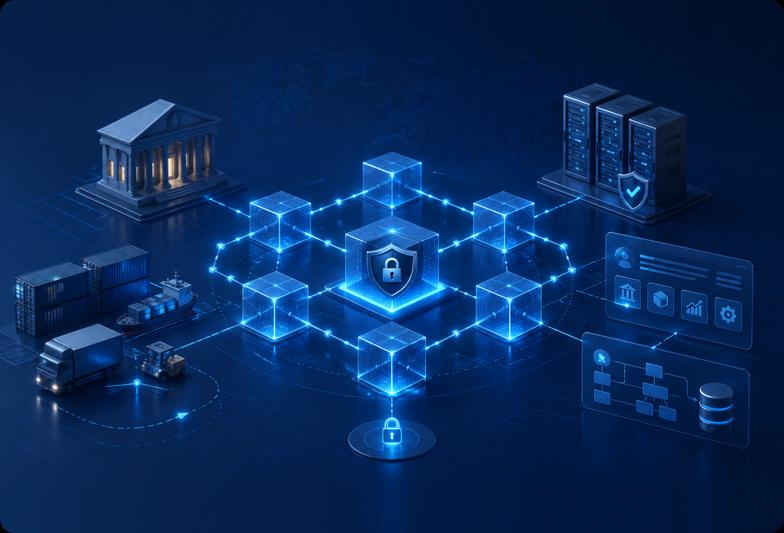
Our cross chain technology team builds interoperability bridges, message-passing protocols, and multi-chain DApps using LayerZero, Wormhole, CCIP, and Axelar — enabling seamless asset and data transfer across 12+ chains.
- LayerZero OApp and OFT standards
- Wormhole message and token bridge integration
- CCIP for enterprise cross-chain data flows
- DEX aggregators with cross-chain routing
For multi-chain protocols, DeFi aggregators, and platforms requiring seamless interoperability.

Enterprise Blockchain Development
Enterprise Blockchain Development
As an enterprise blockchain development company and blockchain development outsourcing partner, we build permissioned blockchain networks for financial institutions, supply chain operators, and regulated industries using Hyperledger and R3 Corda.
- Hyperledger Fabric consortium networks
- R3 Corda for regulated financial workflows
- Private blockchain development with compliance layers
- Integration with existing ERP and core banking
For banks, insurers, logistics operators, and regulated enterprises requiring auditability.
Cross Chain Technology & Bridges
Our cross chain technology team builds interoperability bridges, message-passing protocols, and multi-chain DApps using LayerZero, Wormhole, CCIP, and Axelar — enabling seamless asset and data transfer across 12+ chains.
- LayerZero OApp and OFT standards
- Wormhole message and token bridge integration
- CCIP for enterprise cross-chain data flows
- DEX aggregators with cross-chain routing
For multi-chain protocols, DeFi aggregators, and platforms requiring seamless interoperability.
Enterprise Blockchain Development
As an enterprise blockchain development company and blockchain development outsourcing partner, we build permissioned blockchain networks for financial institutions, supply chain operators, and regulated industries using Hyperledger and R3 Corda.
- Hyperledger Fabric consortium networks
- R3 Corda for regulated financial workflows
- Private blockchain development with compliance layers
- Integration with existing ERP and core banking
For banks, insurers, logistics operators, and regulated enterprises requiring auditability.
Our Cryptocurrency Exchange Development Projects
Filter By:
Industries
Services

AI-Powered Legal Automation Platform for Immigration Services
40%
Reduction in Consultation Handling Time
80%+
Initial Queries Resolved Automatically

AI-Powered Call Management Solution for a Veterinary Telehealth Platform
Instant
First-Ring AI Response
100%
Inbound Calls Successfully Managed
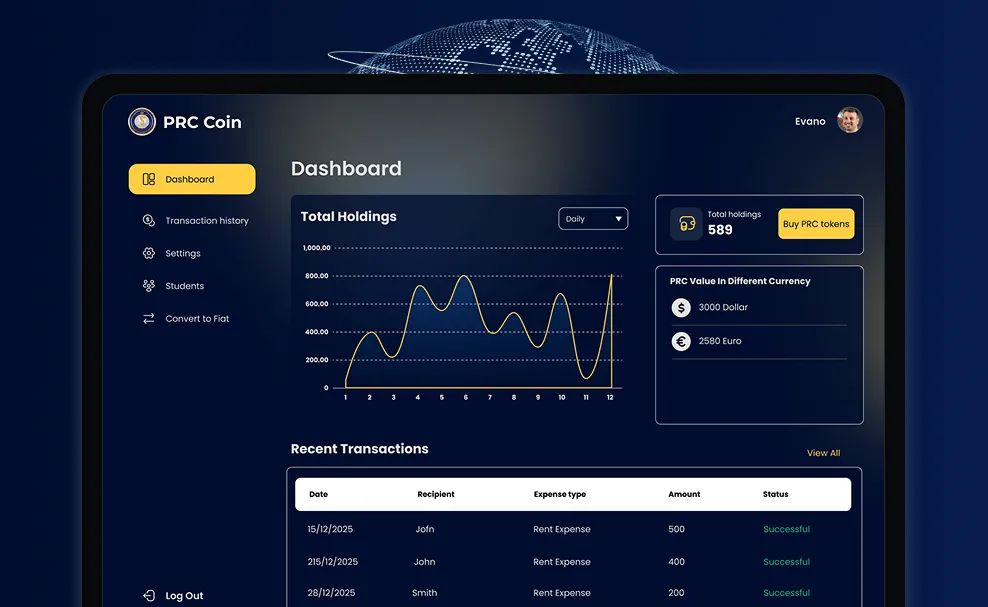
PRC – A Blockchain-Based Exchange and ICO Platform for Real Estate Finance
12K+
Registered Investors
3-in-1 Platform
ICO + Exchange + Payment Ecosystem

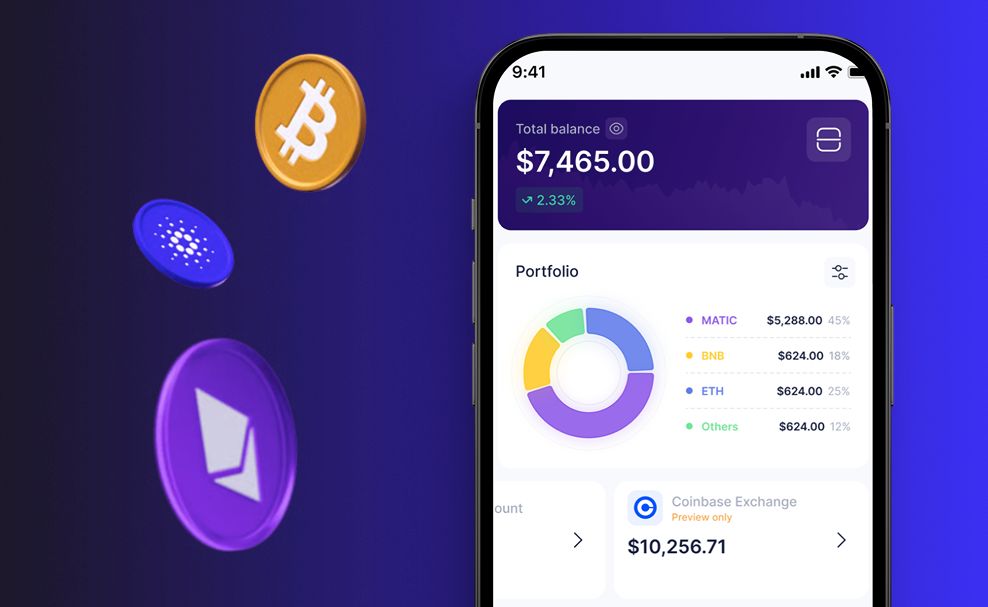
An Enterprise Crypto Suite for Secure Trading
$12B
in cumulative trading volume
2nd Largest
Canada's crypto exchange by volume

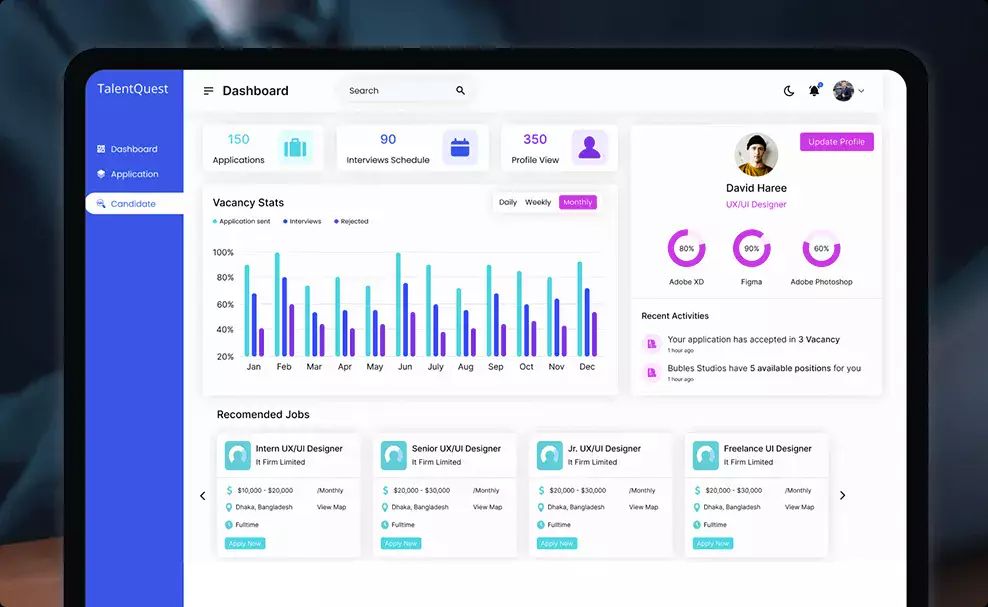
A Deep Learning Solution for Smarter Candidate Search
750,000
candidate matches facilitated
30%
Increase in recruitment efficiency
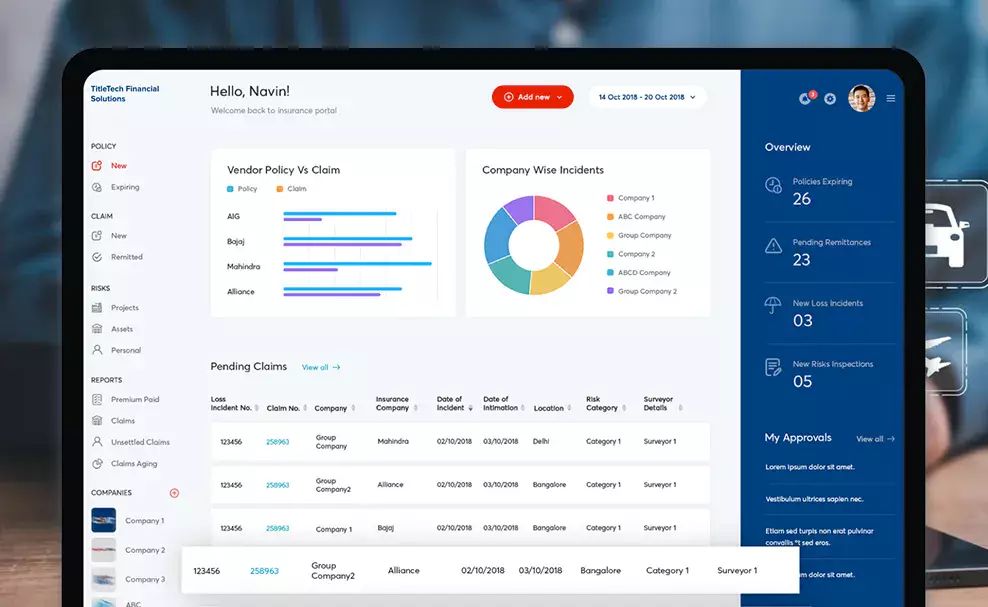
An AI-Powered Solution for Title Insurance Providers
100,000
Processed land deed documents
40%
Increase in extraction accuracy
You've viewed 6 of 21 success stories
What Founders and CTOs Say About Debut Infotech

Alexander Barrett
Founder and CEO, iFinca
Debut Infotech played a pivotal role in bringing my vision for iFinca to life. Their blockchain expertise and innovative approach have significantly enhanced the transparency and traceability of the coffee supply chain. Thanks to them, coffee farmers now have access to a platform that not only connects them directly with buyers but also ensures they receive fair pricing.
View Project Details

Mike Rino
CTO, Integra Ledger
Working with Debut Infotech was instrumental in developing Integra Ledger, our blockchain-based digital signature platform. Their dedication to innovation and attention to detail ensured that we could create a product that rivals industry giants in both quality and affordability. The security and reliability they built into our platform have set a new standard in the e-signature landscape.
View Project Details

Oscar Jofre
CEO, KoreConX
Partnering with Debut Infotech has been a transformative experience for KoreConX. Their expertise in blockchain technology helped us create a secure and efficient ecosystem for managing private capital markets. The collaboration has enabled us to deliver unparalleled value to our clients, streamlining investor relations, compliance, and corporate governance on a global scale.

Haider Rafique
CMO, OKX
Working with Debut Infotech on our white label crypto exchange was a great experience. Their team demonstrated strong expertise in blockchain, delivering a secure, scalable, and user-friendly platform tailored to our needs. Communication was transparent and responsive, and they ensured the project was completed on time with excellent post-launch support. I highly recommend their services for anyone looking to build a crypto exchange.

Bilal Hammoud
Founder of NDAX
Working with Debut Infotech has been a game-changer for NDAX. Their unparalleled expertise in blockchain, DeFi, and crypto wallet development, allowed us to build a seamless, robust platform that enhances user experience and security. Their team's dedication, innovative approach, and attention to detail were evident throughout the project. They consistently exceeded our expectations, ensuring NDAX's position as a leading crypto trading platform.
Alexander Barrett
Founder and CEO, iFinca
Debut Infotech played a pivotal role in bringing my vision for iFinca to life. Their blockchain expertise and innovative approach have significantly enhanced the transparency and traceability of the coffee supply chain. Thanks to them, coffee farmers now have access to a platform that not only connects them directly with buyers but also ensures they receive fair pricing.
View Project Details
Mike Rino
CTO, Integra Ledger
Working with Debut Infotech was instrumental in developing Integra Ledger, our blockchain-based digital signature platform. Their dedication to innovation and attention to detail ensured that we could create a product that rivals industry giants in both quality and affordability. The security and reliability they built into our platform have set a new standard in the e-signature landscape.
View Project Details
Oscar Jofre
CEO, KoreConX
Partnering with Debut Infotech has been a transformative experience for KoreConX. Their expertise in blockchain technology helped us create a secure and efficient ecosystem for managing private capital markets. The collaboration has enabled us to deliver unparalleled value to our clients, streamlining investor relations, compliance, and corporate governance on a global scale.
Haider Rafique
CMO, OKX
Working with Debut Infotech on our white label crypto exchange was a great experience. Their team demonstrated strong expertise in blockchain, delivering a secure, scalable, and user-friendly platform tailored to our needs. Communication was transparent and responsive, and they ensured the project was completed on time with excellent post-launch support. I highly recommend their services for anyone looking to build a crypto exchange.
Bilal Hammoud
Founder of NDAX
Working with Debut Infotech has been a game-changer for NDAX. Their unparalleled expertise in blockchain, DeFi, and crypto wallet development, allowed us to build a seamless, robust platform that enhances user experience and security. Their team's dedication, innovative approach, and attention to detail were evident throughout the project. They consistently exceeded our expectations, ensuring NDAX's position as a leading crypto trading platform.
Alexander Barrett
Founder and CEO, iFinca
Debut Infotech played a pivotal role in bringing my vision for iFinca to life. Their blockchain expertise and innovative approach have significantly enhanced the transparency and traceability of the coffee supply chain. Thanks to them, coffee farmers now have access to a platform that not only connects them directly with buyers but also ensures they receive fair pricing.
View Project Details
Mike Rino
CTO, Integra Ledger
Working with Debut Infotech was instrumental in developing Integra Ledger, our blockchain-based digital signature platform. Their dedication to innovation and attention to detail ensured that we could create a product that rivals industry giants in both quality and affordability. The security and reliability they built into our platform have set a new standard in the e-signature landscape.
View Project Details
Oscar Jofre
CEO, KoreConX
Partnering with Debut Infotech has been a transformative experience for KoreConX. Their expertise in blockchain technology helped us create a secure and efficient ecosystem for managing private capital markets. The collaboration has enabled us to deliver unparalleled value to our clients, streamlining investor relations, compliance, and corporate governance on a global scale.
Haider Rafique
CMO, OKX
Working with Debut Infotech on our white label crypto exchange was a great experience. Their team demonstrated strong expertise in blockchain, delivering a secure, scalable, and user-friendly platform tailored to our needs. Communication was transparent and responsive, and they ensured the project was completed on time with excellent post-launch support. I highly recommend their services for anyone looking to build a crypto exchange.
Bilal Hammoud
Founder of NDAX
Working with Debut Infotech has been a game-changer for NDAX. Their unparalleled expertise in blockchain, DeFi, and crypto wallet development, allowed us to build a seamless, robust platform that enhances user experience and security. Their team's dedication, innovative approach, and attention to detail were evident throughout the project. They consistently exceeded our expectations, ensuring NDAX's position as a leading crypto trading platform.
Debut Infotech vs. Other Web3 Development Companies
Choosing the right web3 development company determines whether your platform ships securely, on time, and ready for real users. This comparison maps the criteria that matter.
Evaluation Criteria
Debut Infotech
Generic Dev Shop
Offshore Freelance
In-House Build
Smart Contract Security Audit

CertiK + Hacken + Internal

Sometimes, extra cost

Rarely included
Requires separate partner
Blockchain Networks Covered
12+ EVM + Non-EVM + Enterprise
2–4 chains typical
1–2 chains
Limited by team depth
Post-Launch Support SLA
24/7 monitoring · 6-month SLA
Best effort
None guaranteed
Yes (ongoing cost)
Tokenomics & Economics
In-house economist
Not included
Not offered
Rare internal expertise
Enterprise Blockchain (Private)
Hyperledger, Corda, Quorum
Limited experience
Not available
Long hiring cycle
Web3 Game Development
Unity + Unreal + On-chain
Web dev only, no gaming
Case-by-case
Very rare combined skill
Cross-Chain Development
LayerZero, Wormhole, CCIP, Axelar
Single-chain usually
Rarely available
Requires senior hire
Compliance & Regulatory
MiCA, VARA, FinCEN, FCA aware
Not in scope
Not offered
Separate legal team needed
IP Ownership Model
Full client ownership
Negotiated per contract
Disputed frequently
Full ownership
Engagement Timeline

8wks (MVP) → 12mo
Unpredictable
High variance
12–18mo to hire + build
What Sets the Best Web3 Development Company Apart
Most development companies can write Solidity. Very few have deployed protocols that survived a market crash, a governance attack, and a regulatory audit in the same quarter. When you evaluate Debut Infotech on production benchmarks — not pitch decks — here is what the record shows.

Security Embedded in Every Layer
Every Debut Infotech engagement includes internal threat modeling, Foundry fuzz testing, and third-party audit by CertiK before any mainnet deployment. Our zero-exploit record across 500+ contracts is not a marketing claim — it is the result of a non-negotiable process.

Blockchain-Native Since 2015
Debut Infotech was building on Ethereum before most web3 development companies existed. Our engineers contributed to open-source Solidity tooling, participated in EIP governance, and have deployed through three market cycles — giving us depth that 2021-vintage shops cannot replicate.

Architecture Decisions That Hold Under Load
We do not select technology from trend reports. Every chain, protocol, and tooling decision is evaluated against your specific throughput, compliance, and liquidity requirements. The wrong architectural choice in week one shows up in production as system failure during peak volume.

Compliance Architecture at the Protocol Layer
KYC, AML, OFAC screening, and Travel Rule considerations are embedded into system design from the first sprint — not bolted on before launch. As a blockchain development company and web3 services partner, we have built to MiCA, VARA, FCA, FinCEN, and FINTRAC standards.
EVALUATE DEBUT INFOTECH — WHAT EVERY ENGAGEMENT INCLUDES
Full-Scope Web3 Development Services Company Deliverables

Dedicated senior web3 architect from day one
Smart contract security audit - CertiK
100% unit + integration test coverage
Subgraph indexer — The Graph Protocol
Multi-sig secure mainnet deployment
Admin dashboard with on-chain analytics
Cross-chain bridge integration (where required)
24/7 post-launch monitoring for 6 months
Tokenomics design documentation
Regulatory compliance architecture memo
NDA and full IP ownership transfer
Fixed-scope SOW with milestone billing




Debut Infotech's Full-Spectrum Web3 Development Capabilities
From foundational smart contract infrastructure to advanced DeFi primitives and AI-augmented on-chain systems — every capability is production-tested across 50+ deployed projects.
Capability
Description
Smart Contract Architecture
Solidity and Rust contract design with access control, event emission, and storage pattern optimization. Every contract includes NatSpec documentation and full test suite before delivery.
Token Standards (ERC-20 / ERC-721 / ERC-1155)
Fungible token, NFT, and semi-fungible token implementations with custom extensions — staking hooks, transfer restrictions, snapshot capabilities, and permit functions (EIP-2612).
Wallet Integration Layer
WalletConnect v2, MetaMask SDK, Phantom, and Coinbase Wallet integration via wagmi and viem — supporting gasless transactions through ERC-2771 meta-transaction relayers.
On-Chain Identity & Access Control
Role-based access control (RBAC), owner-pattern contracts, and multi-sig governance via Gnosis Safe — with upgrade and pause authority restricted to multi-sig key holders.
Subgraph Indexing
Custom subgraph development on The Graph Protocol for real-time on-chain data queries — replacing expensive RPC polling with efficient GraphQL APIs for DApp frontends.
Oracle Integration
Chainlink Data Feeds, TWAP oracles, and Pyth Network price streams — with custom oracle aggregation logic and circuit breaker patterns for DeFi price manipulation resistance.
Testnet-to-Mainnet Deployment Pipeline
Deterministic deployment scripts with Foundry/Hardhat, multi-chain deployment management, constructor parameter verification, and contract address registry management.
Multi-Sig Secure Deployment
All production deployments use Gnosis Safe multi-sig with distributed key holders — ensuring no single point of key compromise can result in unauthorized contract upgrades or fund movements.
DApp Frontend (React / Next.js)
Production web DApp built with React, Next.js, wagmi, and viem — with real-time on-chain event subscriptions, responsive design, and WalletConnect-compliant connection flows.
Gas Optimization
Assembly-level and Solidity-level gas optimization reducing average transaction costs by 30–50% — covering storage packing, loop optimization, and custom error patterns.
Capability
Description
AMM & Concentrated Liquidity Pools
Custom automated market maker implementations with fee-tier architecture, concentrated liquidity ranges (Uniswap v3-style), and liquidity provider reward distribution — with flash loan protection and MEV resistance.
Cross-Chain Bridge Architecture
LayerZero OApp and OFT implementations, Wormhole message passing, and CCIP-based enterprise data flows — enabling seamless asset transfers and protocol state synchronization across 12+ chains.
DAO Governance System
On-chain governance with Governor Bravo or OZ Governor — supporting token-weighted, quadratic, and conviction voting with timelocks, proposal thresholds, and Gnosis Safe treasury execution.
DeFi Protocol Primitives
Lending market implementation (Compound/Aave V3 architecture), yield aggregator vaults (ERC-4626), liquid staking derivatives, and veToken governance lockup systems with multiplier logic.
NFT Marketplace Architecture
Full-stack NFT marketplace with Seaport-based order protocol, royalty enforcement (EIP-2981), trait-based filtering, bulk listing operations, and auction mechanics (English and Dutch).
Web3 Game Economy Systems
On-chain loot systems, play-to-earn reward distribution contracts, NFT breeding and evolution mechanics, guild treasury management, and seasonal ranking systems with verifiable randomness via Chainlink VRF.
Account Abstraction (ERC-4337)
Smart contract wallet development with social recovery, session keys, gas sponsorship via paymasters, and batch transaction execution — enabling non-custodial wallets with Web2-equivalent UX.
Stablecoin Development Architecture
Collateralized and algorithmic stablecoin systems — covering CDP vault architecture, peg stability modules, liquidation engines, and emergency governance mechanisms.
Token Launchpad / IDO Systems
Fair-launch and curated IDO platforms with KYC-gated participation, vesting cliff and linear release contracts, whitelist management, and multi-round allocation mechanics.
ZK Proof Integration
zkSNARK and zkSTARK integration for privacy-preserving DApps — covering identity proofs, range proofs for private trading, and ZK rollup client development using Circom and SnarkJS.
Capability
Description
AI Smart Contract Auditing Assistant
ML-powered pre-audit analysis flagging common vulnerability patterns (reentrancy, integer overflow, access control gaps) before human auditors engage — reducing audit turnaround time and cost.
On-Chain Anomaly Detection
Real-time monitoring of contract interactions and wallet behavior using ML models trained on historical exploit patterns — triggering automated circuit breakers or admin alerts when anomalous activity is detected.
AI Oracle Aggregation
ML-based oracle data validation identifying price feed manipulation attempts, outlier detection across aggregated data sources, and adaptive TWAP window sizing based on market volatility conditions.
Predictive Liquidity Management
Forecasting models predicting liquidity pool imbalances, impermanent loss risk windows, and optimal rebalancing timing — enabling automated or recommendation-driven liquidity management for protocol operators.
AI-Driven Tokenomics Simulation
Agent-based simulation of token economies — modeling inflation, staking participation, sell pressure, and governance participation across thousands of synthetic market actors before deployment.
Smart Contract Code Generation
LLM-assisted Solidity and Rust code generation for boilerplate contract logic — accelerating development cycles while maintaining mandatory human review and audit before any production deployment.
On-Chain Sentiment & Market Intelligence
Real-time crawl and NLP analysis of governance forums, social signals, and on-chain data — surfacing emerging protocol risks, sentiment shifts, and governance attack vectors for protocol operators.
AI KYC/AML Compliance Engine
ML-based transaction monitoring and identity risk scoring — integrating with Chainalysis, TRM Labs, and Elliptic APIs for automated suspicious activity detection, PEP screening, and SAR-ready reporting.
AI-Powered Gas Optimization
Automated gas profiling and optimization suggestions trained on EVM execution traces — identifying inefficient patterns and suggesting assembly-level improvements specific to each contract's execution profile.
Dynamic MEV Protection
ML-based MEV detection and frontrunning resistance — including adaptive slippage settings, private mempool routing via Flashbots Protect, and commit-reveal scheme recommendations based on transaction sensitivity.
Debut Infotech's End-to-End Web3 Development Services
As a full-service blockchain development company and web3 services partner, every engagement covers strategy, architecture, development, security, and post-launch operations.

Web3 Architecture & Strategy Consulting
Chain selection, protocol design, tokenomics, and compliance architecture

We define the right web3 development platform architecture, chain selection, and integration strategy based on your users, markets, and compliance obligations. This determines everything from smart contract upgrade patterns to custody model and liquidity strategy — and getting it wrong at the architecture stage creates the most expensive rework possible downstream.
Chain Selection
Tokenomics Design
Compliance Mapping
Architecture Document
Threat Modeling

Smart Contract Development & Audit
Production-grade Solidity, Rust, and Move with third-party security audit


DeFi Protocol Development
DEXs, lending markets, yield aggregators, stablecoins

Crypto Wallet & Custody Development
MPC wallets, smart contract wallets, white-label solutions

Web3 Marketplace Development
NFT marketplaces, P2P trading, asset exchanges

Enterprise & Private Blockchain Development
Hyperledger, Corda, and permissioned Ethereum

Cross-Chain & Interoperability Development
Bridges, messaging protocols, multi-chain architecture

Post-Launch Support & Protocol Operations
Monitoring, upgrades, optimization
See What We Build — Our White Label Web3 Platform Previews
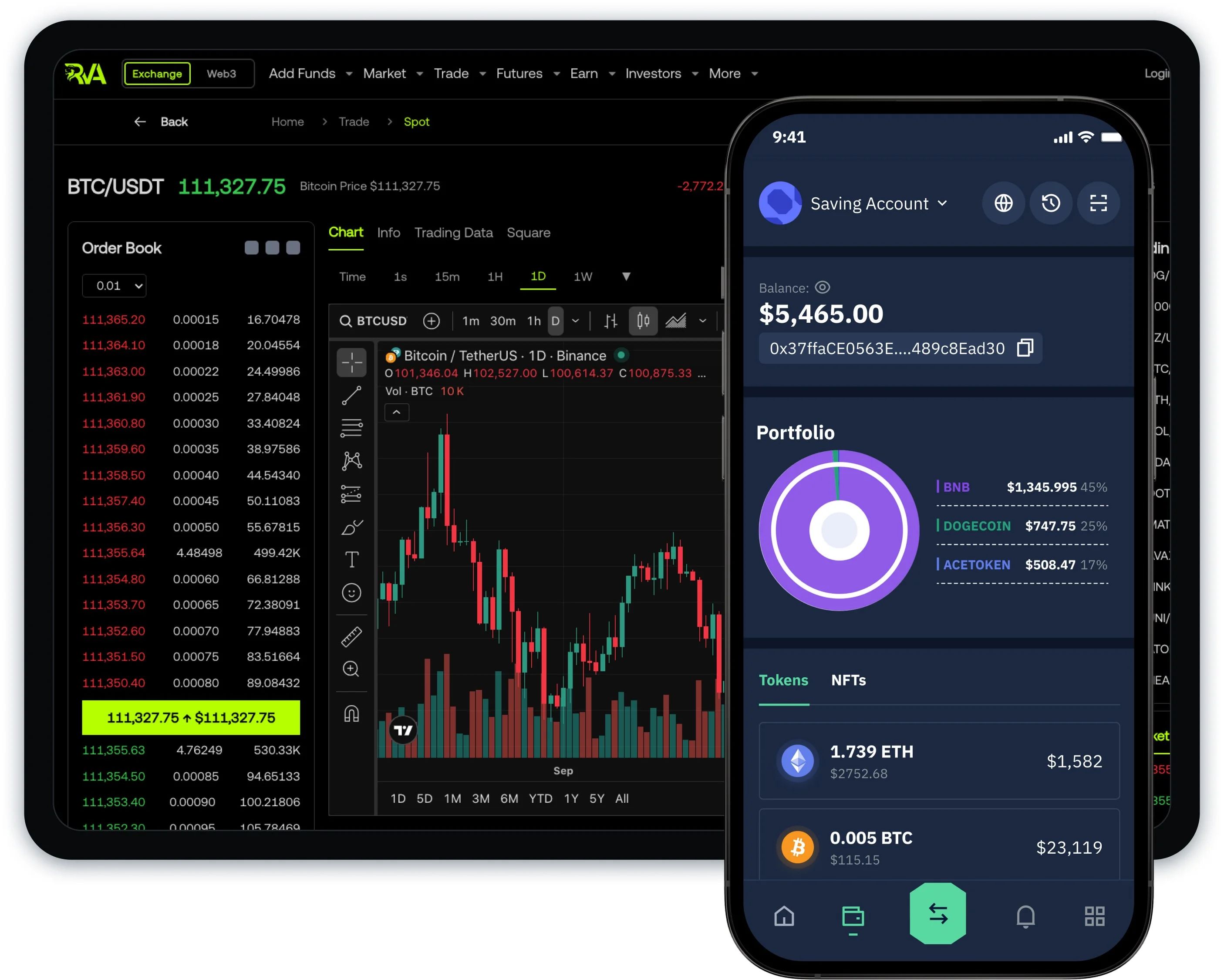
A preview of production interfaces from web3 development projects Debut Infotech has developed — built for real users, real liquidity, and real trading volume.
White Label Crypto Wallet
Multi-Chain Branded Wallet — iOS, Android & Web
MPC-secured white label wallet with your brand, supporting 50+ assets across Ethereum, Solana, BNB Chain, and Polygon. Includes fiat on-ramp, staking, and in-app swap with enterprise custody options.
White Label Crypto Exchange Platform
CEX / DEX / Hybrid Exchange with Full Order Book
High-performance trading engine supporting spot, margin, and derivatives trading. Integrated KYC/AML, liquidity aggregation, and compliance-ready reporting. Sub-millisecond order matching for 10,000+ TPS.
White Label Asset Tokenization Platform
Real World Asset (RWA) Tokenization & Trading
End-to-end RWA tokenization for real estate, private equity, bonds, and commodities. Includes fractional ownership, KYC-gated investor onboarding, automated yield distribution, and compliant secondary market trading.
Building a web3 platform?
Request a live walkthrough of production DApp interfaces from our portfolio — including DeFi, NFT marketplace, DAO, and web3 app development company deliverables.

Technology Infrastructure Behind Every Web3 Project We Build
As a best web3 platform development company, every technology in our stack is selected for one reason: it must perform under real on-chain conditions — high concurrency, adversarial security environments, and regulatory audit requirements simultaneously.

12+ Blockchain Networks Supported
Mainnets, L2s, app chains, and enterprise ledgers

500+ Smart Contracts Deployed
Production protocol logic across wallets, DeFi, and RWA

Zero-Exploit Security Record
Audit-first delivery with fuzz testing and runtime monitoring
Blockchain Networks — 12+ Chains Supported
Execution environments selected for liquidity, speed, developer tooling, and long-term protocol fit.

Ethereum

Solana

Polygon

Avalanche

BNB Chain

Base

Arbitrum

Optimism

Aptos

Sui

ImmutableX

Ronin
Smart Contract & Protocol
Solidity
Rust / Anchor
Move
Vyper
Foundry
Hardhat
OpenZeppelin
Uniswap v3
Aave V3
ERC-20/721/1155/4337
Security & Audit
CertiK
Hacken
Slither
Echidna
Foundry Fuzz
MythX
Tenderly
Forta
Mythril
Certora
Wallet & Custody
MPC Wallets
HSM
Gnosis Safe
ERC-4337
WalletConnect v2
Fireblocks
Ledger SDK
BIP32/BIP44
Interoperability
LayerZero
Wormhole
Chainlink CCIP
Axelar
Hyperlane
Across Protocol
Frontend & DApp
React / Next.js
wagmi
viem
ethers.js
web3.js
RainbowKit
TradingView
React Native
Infrastructure & Indexing
The Graph
Alchemy
Infura
QuickNode
Security Infrastructure Built Into Every Web3 Project Debut Infotech Delivers
Every web3 platform we build is hardened at the smart contract, custody, and infrastructure layer — ensuring your protocol is secure before a single user connects their wallet.
CertiK Smart Contract Audit
Every smart contract undergoes independent CertiK or Hacken security auditing before production deployment — with all critical and high-severity findings fully remediated. Audit reports are delivered to clients and published publicly.
Formal Verification
For high-stakes DeFi protocols managing large TVL, we implement formal verification using Certora Prover — mathematically proving that smart contract logic behaves exactly as specified under all possible inputs.
Fuzz Testing with Foundry
Echidna property-based fuzz testing and Foundry invariant tests generate millions of adversarial inputs — discovering edge cases and economic attack vectors that deterministic unit tests cannot find.
Cold Storage Architecture
Protocol treasuries and user funds are held in air-gapped cold storage with geographically distributed multi-sig key holders — with hot wallet pools sized to operational requirements only, never convenience.
On-Chain Monitoring & Threat Detection
Forta Network agents and custom monitoring via Tenderly alert on anomalous contract interactions in real time — with automated circuit breakers that pause protocol functions when exploit-like activity is detected.
Compliance-Aware Architecture
KYC/AML via Sumsub and Synaps, OFAC SDN screening, Travel Rule compliance through TRISA/Notabene, and jurisdiction-specific data handling — all embedded into the transaction flow from architecture stage, not retrofitted post-launch.
MPC Key Management
Multi-party computation key management eliminates single points of key compromise without the operational overhead of traditional multi-sig — providing institutional-grade custody security with operational practicality.
DDoS & Infrastructure Hardening
Cloudflare enterprise protection, rate-limited RPC endpoints, WAF rulesets tuned for web3 attack patterns, and geo-distributed node architecture ensuring the DApp frontend and API layer remain operational under sustained attack.
Penetration Testing on Delivery
Every production deployment includes third-party penetration testing covering the frontend, API layer, admin panel, and wallet integration — with full remediation of all findings before any user-facing launch.
Web3 Development Across Every Industry Vertical
From regulated financial markets to emerging gaming economies — Debut Infotech builds web3 development solutions that meet the compliance, performance, and user demands of every sector.

Financial Services
DeFi protocols, tokenized assets, on-chain settlement, and institutional custody for banks, hedge funds, and neobanks.
DeFi lending and trading platforms
Tokenized real-world assets (RWA)
Enterprise settlement blockchain

Gaming & Entertainment
Web3 game development, NFT in-game economies, and play-to-earn systems on ImmutableX, Polygon, and Ronin.
P2E and GameFi platforms
NFT character and item systems
Guild governance DAOs

Healthcare
Private blockchain networks for patient data sharing, clinical trial transparency, and pharmaceutical supply chain verification.
HIPAA-aware data networks
Clinical trial audit trails
Drug supply chain provenance

Real Estate
Real estate tokenization platforms, fractional ownership systems, and automated rental yield distribution via smart contracts.
Property token issuance platforms
Fractional ownership DAOs
Automated yield distribution

Supply Chain
Hyperledger Fabric and Corda networks for multi-party supply chain visibility, provenance tracking, and automated settlement.
Consortium traceability networks
Smart contract settlement
IoT-to-blockchain data feeds

Creative & Media
NFT creator platforms, music rights tokenization, digital art marketplaces, and royalty automation for creators and publishers.
Creator royalty contracts
Music rights DAOs
NFT fan engagement platforms

Government & Public Sector
CBDC distribution infrastructure, government bond tokenization, and public audit trail systems with full regulatory reporting.
CBDC platform development
Government bond tokenization
Public audit blockchain systems

Energy & Utilities
Carbon credit tokenization, peer-to-peer energy trading platforms, and renewable energy certificate (REC) tracking systems.
Carbon credit token platforms
P2P energy trading DEX
REC issuance and trading
Ready to Transform your Industry?
Join the hundreds of enterprises building the future on FluidChain's institutional-grade infrastructure.

Meet Our Experts

We've stepped into enough mid-crisis blockchain engagements to know exactly where things break down. Scope that was never properly defined. Architecture decisions rushed under deadline pressure. Integration dependencies nobody accounted for until they became blockers. The process we run today exists because of those lessons — and it's why our clients reach production without the chaos that derails most enterprise blockchain programs.
Daljit Singh
Director of Operations, Debut Infotech
How Debut Infotech's Web3 Development Process Actually Works
We do not treat web3 development as a feature sprint. It is a decentralized financial infrastructure build — where Week 1 decisions determine whether the protocol survives its first on-chain stress event.
1
Protocol Model & Discovery

2
Architecture Design

3
Smart Contract Development
4
Security Audit Gate
5
Compliance Integration
6
Mainnet Deployment
7
Post-Launch Operations
PHASE 01
Protocol Model & Discovery
We start with the business, not the tech stack. Understanding your users, regulatory obligations, and integration requirements before architecture decisions are made eliminates the most expensive class of problems — structural ones discovered after deployment.

Requirements workshop with product and engineering leads
Technology stack selection based on operational requirements, not trends
Compliance requirements mapped and embedded into system design
Architecture document with cost-of-change analysis at each decision point
Go/no-go review before development investment is committed
Deliverables
How Much Does Web3 Development Cost?
Web3 development costs range from $25,000 for a basic smart contract DApp to $1,500,000+ for enterprise blockchain infrastructure — driven by protocol complexity, chain selection, security requirements, and compliance obligations.
The cost of a web3 development project is primarily determined by: protocol complexity (simple token vs. full DeFi protocol), smart contract audit scope, custody architecture (custodial vs. MPC), compliance requirements (KYC, AML, Travel Rule), chain selection and integration overhead, and security validation depth (audit, formal verification, pen testing).
White-label and MVP deployments offer the fastest time-to-market. Custom DeFi protocols and enterprise blockchain networks require significantly higher investment — but produce infrastructure that supports institutional-scale operations and regulatory scrutiny.
Build timeline and total investment move together but not linearly. Compressed timelines require larger engineering teams and faster audit cycles, increasing total cost. Under-resourcing a web3 project creates post-launch failures that cost multiples of what adequate investment would have required.
Quick Cost Overview by Project Type
Simple Smart Contract DApp
$25K – $60K
NFT Collection + Marketplace
$50K – $120K
DeFi Protocol (DEX/AMM)
$120K – $400K
Web3 Game (Full P2E)
$150K – $600K
DAO Governance Platform
$60K – $180K
Web3 Wallet (MPC/Custom)
$80K – $250K
Enterprise Blockchain Network
$300K – $1.5M+
Cross-Chain Bridge
$150K – $500K
Web3 Project Type
Estimated Cost
Typical Timeline
Key Cost Drivers
Basic Smart Contract DApp
$25,000 – $60,000
4 – 8 weeks
Contract complexity, audit scope, UI requirements
NFT Collection + Mint Site
$30,000 – $80,000
6 – 10 weeks
Collection size, reveal mechanics, metadata storage
NFT Marketplace (Full)
$80,000 – $200,000
3 – 5 months
Order protocol, royalty systems, multi-chain support
DeFi Protocol (DEX / AMM)
$120,000 – $400,000
4 – 8 months
Pool architecture, liquidity design, oracle integration
DAO Platform
$60,000 – $180,000
2 – 5 months
Voting mechanisms, treasury architecture, governance UI
Web3 Game (P2E / GameFi)
$150,000 – $600,000
5 – 12 months
Game engine, NFT economy, token design, multiplayer
Web3 Wallet (MPC / ERC-4337)
$80,000 – $250,000
3 – 6 months
Custody architecture, key management, mobile apps
Cross-Chain Bridge
$150,000 – $500,000
4 – 8 months
Protocol choice, security model, supported chains
Enterprise Blockchain Network
$300,000 – $1,500,000+
8 – 18 months
Nodes, participants, compliance, ERP integration
Stablecoin System
$200,000 – $600,000
5 – 10 months
Collateral model, oracle dependency, stability mechanisms
What Drives Web3 Development Cost

Protocol Complexity
Simple token contracts vs. multi-contract DeFi systems with inter-protocol dependencies and upgrade mechanisms.

Security Audit Scope
CertiK / Hacken audit cost scales with contract count and TVL. Formal verification adds $30K–$80K for DeFi protocols.

Custody Architecture
MPC wallet systems and HSM integration add $40K–$120K over simple hot wallet implementations.

Compliance Integration
KYC, AML, OFAC screening, and Travel Rule compliance add $30K–$100K depending on jurisdiction count.

Chain Selection & Bridging
Multi-chain deployments multiply smart contract scope and testing requirements significantly.

Post-Launch SLA
24/7 monitoring, incident response, and 6-month support is included in Debut Infotech engagements as standard.
Build Web3 Infrastructure with Architecture You Can Trust
The architectural decisions made in week one determine your security posture, compliance readiness, and scalability ceiling twelve months after launch. Start with the right foundation — get a fixed-scope estimate and technical blueprint before committing to development.

Frequently Asked Questions
What is a web3 development company?
A web3 development company is a specialized software firm that designs, builds, and deploys decentralized applications, smart contracts, blockchain protocols, and crypto-native products. Unlike traditional software agencies, a dedicated blockchain web3 development company brings depth in cryptography, on-chain economics, and adversarial security environments — skills that general-purpose development shops cannot replicate. Core services include DeFi protocol development, NFT platforms, DAO governance, web3 wallets, web3 game development, enterprise blockchain networks, and cross-chain infrastructure.
How do I evaluate and choose the best web3 development company?
When you evaluate the web3 development company, the criteria that matter are: (1) portfolio of live, revenue-generating web3 projects with verifiable TVL or user metrics; (2) smart contract audit history; (3) depth of chain coverage beyond basic Ethereum; (4) in-house tokenomics and compliance expertise; (5) post-launch SLA terms; (6) verifiable client reviews on Clutch or GoodFirms. The best web3 development company will have live protocols under management, not just portfolio screenshots.
What is the difference between blockchain development and web3 development?
Blockchain development focuses on the protocol layer — consensus mechanisms, node configuration, validator infrastructure, and low-level on-chain logic. Web3 development covers the full stack: smart contracts, decentralized application frontends, wallet integrations, subgraph indexers, oracle systems, tokenomics, and governance — everything required to build a user-facing product on top of blockchain infrastructure. A full-service web3 development services company like Debut Infotech handles both layers end-to-end.
How long does web3 development take?
Web3 project timelines range from 4–8 weeks for a basic smart contract DApp to 12–18 months for enterprise blockchain networks. A DeFi protocol takes 4–8 months; an NFT marketplace 3–5 months; a web3 game 5–12 months; a DAO platform 2–5 months. Timeline is driven by protocol complexity, the number of smart contract audits required, compliance integration depth, and security validation cycles. Compressed timelines require larger teams and faster audit cycles — both of which increase cost.
How much does web3 development cost?
Web3 development costs range from $25,000 for a basic smart contract DApp to $1,500,000+ for enterprise blockchain infrastructure. A DeFi AMM protocol typically costs $120K–$400K; an NFT marketplace $80K–$200K; a web3 game $150K–$600K; an enterprise blockchain network $300K–$1.5M+. The primary cost drivers are protocol complexity, security audit scope, custody architecture, compliance requirements, and post-launch SLA. Debut Infotech provides fixed-scope proposals with milestone billing for every engagement.
What is included in Debut Infotech's web3 development services?
Every Debut Infotech web3 development services engagement includes: dedicated senior web3 architect from day one, smart contract development in Solidity or Rust, third-party security audit by CertiK, 100% unit and integration test coverage, subgraph indexer deployment on The Graph, multi-sig secure mainnet deployment, admin dashboard with on-chain analytics, 6-month post-launch monitoring SLA, tokenomics design documentation, regulatory compliance architecture memo, NDA on request, and full IP ownership transfer to the client at delivery.