
Table of Contents
Our Global Presence :


Home / Blog / Mobile Development
Everything You Need to Know About React Native Mobile App Development

by

November 18, 2025

by
November 18, 2025
Businesses need strong, scalable, and high-performing apps that work well on all devices in today’s fast-paced digital world. This is where React Native mobile app development really shines. React Native is one of the most flexible and widely used frameworks for developing mobile apps. It lets developers create dynamic cross-platform apps with a single codebase, saving time and money while delivering a native-like experience.
In the last few years, both startups and big companies have turned to React Native for app development. The framework gives businesses the flexibility and performance they need, from making minimum viable products (MVPs) to deploying full-scale enterprise solutions. As more companies choose to hire React Native developers or collaborate with a React Native development company, understanding its ecosystem, benefits, and cost implications is essential for making informed decisions.
Bring Your App Idea to Life with React Native Experts
Looking to build a high-performance, cross-platform mobile app that stands out? Debut Infotech’s seasoned React Native developers specialize in delivering scalable, cost-effective, and innovative solutions tailored to your business goals.
What Is React Native?
React Native is an open-source framework developed by Facebook that enables developers to build a React Native app for both Android and iOS using JavaScript and React. Instead of creating two separate applications for each platform, developers can build React Native apps with a single codebase, significantly reducing development time and costs.
The key advantage of mobile app development with React Native lies in its ability to deliver a truly native experience. It bridges the gap between web and mobile development, allowing React components to be rendered using native APIs rather than web views. This ensures superior performance compared to hybrid solutions.
Why Choose React Native for App Development?
React Native has become one of the most preferred frameworks for mobile app development — and for good reason. Its flexibility, performance, and cost efficiency make it a go-to choice for startups and large enterprises alike. Let’s explore why it stands out:
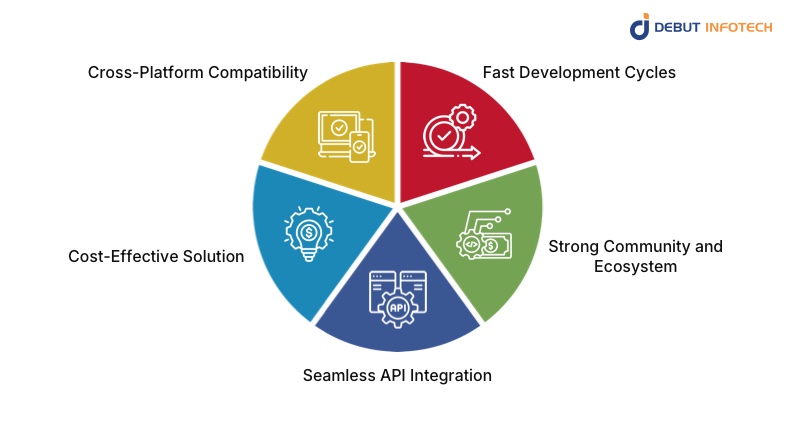
1. Cross-Platform Compatibility
With React Native, a single codebase efficiently powers both iOS and Android applications. This unified approach not only minimizes development time but also guarantees a consistent user interface (UI) and user experience (UX) across devices. It eliminates redundant work, allowing teams to focus on enhancing app performance and user satisfaction rather than rewriting code for different platforms.
2. Fast Development Cycles
Speed is one of React Native’s most significant advantages. The Hot Reloading and Fast Refresh features enable developers to view real-time updates in the app as soon as changes are made — without having to rebuild from scratch. This significantly reduces iteration time, leading to faster development cycles, quicker debugging, and a shorter time-to-market, which is critical in competitive digital landscapes.
3. Cost-Effective Solution
Developing native apps separately for iOS and Android often doubles costs and effort. React Native addresses this challenge by allowing developers to reuse up to 90% of code between platforms. This drastically lowers overall mobile app development costs while maintaining high-quality performance. For startups or mid-sized businesses, React Native offers an affordable path to building robust, feature-rich applications.
4. Strong Community and Ecosystem
React Native boasts a vibrant open-source community backed by Meta (Facebook) and thousands of global contributors. Developers benefit from a massive ecosystem of ready-to-use libraries, UI kits, third-party plugins, and troubleshooting support. Whether it’s integrating complex features or optimizing performance, the community ensures continuous improvement and rapid problem-solving.
5. Seamless API Integration
Integration with backend systems and third-party APIs is smoother with React Native. The framework simplifies API development and integration, ensuring secure and efficient communication between the frontend and backend. This leads to dynamic, data-driven apps capable of real-time updates — ideal for eCommerce, finance, and social platforms that rely on seamless data exchange.
In short, React Native combines speed, affordability, and adaptability — enabling developers to create high-performing mobile applications that deliver a native-like experience across platforms.
The Benefits of React Native App Development
1. Near-Native Performance: Unlike hybrid frameworks, React Native utilizes native components, ensuring smooth animations and performance that rivals fully native apps.
2. Reusable Components: Developers can reuse UI components across different platforms, reducing duplication and improving consistency across the app’s design.
3. Simplified Maintenance: Because most of the code is shared between platforms, bug fixes, updates, and upgrades are easier and faster to deploy.
4. Rich UI and UX: React Native supports advanced UI libraries that enable stunning interfaces without compromising performance — perfect for high-quality mobile experiences.
5. Growing Market Demand: With the surge in cross-platform development, the demand to hire React Native developers is increasing globally. Businesses are rapidly turning to React Native app development companies to bring their digital visions to life.
How Does React Native Work?
React Native uses the same building blocks as regular iOS and Android apps. However, instead of relying solely on web technologies, it uses JavaScript to bridge communication between the app and native components.
When you build a React Native app, the JavaScript code runs in a separate thread and communicates with native APIs through a “bridge.” This ensures that user interactions are processed efficiently, maintaining smooth performance and responsiveness.
This architecture makes React Native app development ideal for projects that require native capabilities without writing platform-specific code.
Key Features of React Native
- Single Codebase: Build once, deploy everywhere.
- Hot Reloading: Enables instant feedback during development.
- Third-Party Plugins: Expand app capabilities effortlessly.
- Rich Developer Tools: Access to debugging, testing, and performance tools.
- Modular Architecture: Allows teams to work independently on separate modules.
- Offline Support: Reliable app functionality, even without an internet connection.
React Native offers an ideal balance of performance, scalability, and development speed. Businesses looking to develop React Native apps can expect:
- Reduced costs through shared codebases.
- Quicker deployment times.
- Access to global developer talent through offshore React Native development.
- Long-term flexibility is the framework that evolves with the latest tech trends.
This makes it especially suitable for enterprises looking to outsource React Native development while maintaining control over quality and results.
React Native vs. Other Mobile App Development Frameworks
| Feature | React Native | Flutter | Xamarin | Ionic |
| Language Used | JavaScript / TypeScript | Dart | C# | HTML, CSS, JavaScript |
| Performance | Near-Native | High | Native-like | Web-based |
| Code Reusability | 90–95% | 80–90% | 75–85% | 70–80% |
| Community Support | Large & Active | Growing | Moderate | Mature |
| Learning Curve | Moderate | Steeper | Moderate | Easy |
| UI Customization | High | Excellent | Good | Limited |
React Native strikes a strong balance between performance, flexibility, and community support. It’s especially favored by top mobile app development companies that prioritize scalability and quick deployment.
Mobile App Development with React Native: The Process
The mobile app development lifecycle for React Native projects follows a well-defined, iterative workflow that balances speed, performance, and scalability.
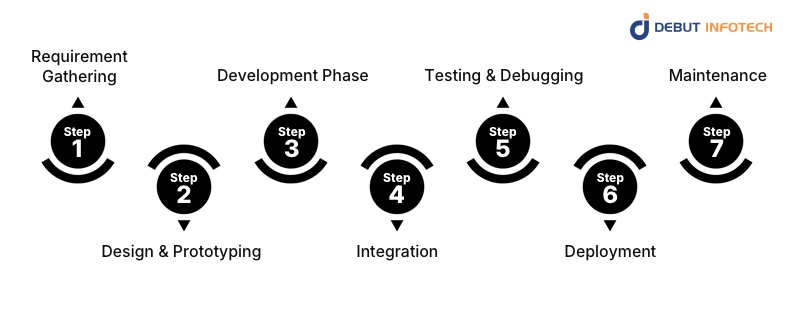
- Requirement Gathering: The process begins with defining clear project goals, understanding target users, and identifying must-have features. This stage sets the foundation for an app that aligns with both user expectations and business objectives.
- Design & Prototyping: Once requirements are precise, designers create wireframes and interactive prototypes to visualize the app’s interface and user journey. This helps refine usability and aesthetics before development begins.
- Development Phase: Skilled React Native developers use a modular approach to build the app’s core functionality. The framework’s component-based architecture enables code reuse across iOS and Android, significantly reducing development time.
- Integration: At this stage, developers integrate APIs and backend services to enable features such as data storage, authentication, and real-time updates, ensuring seamless communication between the frontend and backend systems.
- Testing & Debugging: Rigorous testing is conducted to identify bugs, resolve performance bottlenecks, and ensure compatibility across devices. Tools like Jest and Detox are commonly used to maintain app stability and responsiveness.
- Deployment: After thorough testing, the app is deployed to the App Store and Google Play, following respective guidelines for app submission, performance, and compliance.
- Maintenance: Post-launch, developers monitor the app for crashes, gather user feedback, and release periodic updates to enhance performance, security, and user experience.
This streamlined, agile approach enables faster go-to-market timelines, consistent quality, and cost efficiency — key reasons many startups and enterprises choose React Native for mobile app development.
React Native App Development Cost
The cost of React Native app development varies depending on project scope, complexity, design requirements, and the location of the development team. On average, you can expect:
- Simple App: $20,000–$40,000
- Medium Complexity App: $40,000–$80,000
- Complex App (eCommerce, SaaS, etc.): $80,000–$150,000+
Outsourcing or offshore React Native development to regions such as India can reduce overall mobile app development costs significantly while maintaining quality.
Choosing the Right React Native Development Company
Selecting the right development partner is crucial for success. Here’s what to look for:
- Proven Experience: Choose React Native app development companies with a track record of successful cross-platform projects.
- Full-Cycle Development Services: Ensure they handle everything — from UI/UX design to deployment.
- Scalable Teams: A reliable partner can provide a dedicated software development team for long-term collaboration.
- Post-Launch Support: Continuous maintenance ensures app stability.
- Transparent Pricing: Clear breakdowns of mobile app development cost and deliverables.
Debut Infotech, a leading blockchain and mobile app development company, has extensive experience building high-quality apps using React Native and other mobile app development frameworks. Their developers specialize in scalable architecture, API integration, and cross-platform performance optimization.
When to Hire React Native Developers
You should consider hiring skilled React Native developers when:
- You want to launch a cross-platform app quickly.
- You need cost-efficient mobile app development services.
- Your project requires integration with APIs or backend systems.
- You plan to scale your app with continuous updates.
Partnering with an experienced React Native development company like Debut Infotech ensures your project is handled by experts who understand both business goals and technical requirements.
Best React Native Development Tools and Emerging Technologies
A successful React Native mobile app development project depends heavily on the tools and technologies developers use. These tools not only improve efficiency but also ensure that apps are scalable, secure, and high-performing — especially when paired with emerging technologies shaping the next wave of innovation.
Essential React Native Development Tools
To develop React Native apps effectively, developers rely on a suite of robust and specialized tools designed to simplify the workflow, enhance performance, and streamline deployment:
- Expo: A robust framework and platform that simplifies both development and testing. It allows developers to quickly prototype and preview React Native applications on real devices without additional setup.
- Redux: Essential for state management, Redux helps maintain predictable application states, especially in large-scale apps where data consistency across screens is critical.
- Visual Studio Code (VS Code): A lightweight yet feature-rich IDE with excellent React Native support. It offers debugging tools, extensions, and real-time collaboration features to make coding more efficient.
- Jest: A comprehensive testing framework for unit and integration testing, ensuring that every component functions as expected before deployment.
- Bitrise: An automation tool for continuous integration and deployment (CI/CD). It streamlines build, test, and release cycles, reducing manual errors and ensuring faster delivery.
- React Navigation: A must-have library for managing navigation in React Native apps, enabling smooth and intuitive transitions between screens.
Integrating React Native with Emerging Technologies
As digital ecosystems evolve, React Native continues to prove its versatility by integrating seamlessly with cutting-edge technologies. This adaptability not only keeps apps modern and engaging but also gives businesses a competitive edge.
- AI & Machine Learning (ML): Using React Native, developers can embed AI-driven features such as chatbots, recommendation engines, and predictive analytics directly into mobile apps.
- Blockchain: Through API integration, React Native applications can leverage blockchain technology for secure transactions and transparent data management, ideal for fintech, gaming, and logistics platforms.
- AR/VR (Augmented and Virtual Reality): React Native supports the creation of immersive, interactive environments, bringing gaming, retail, and education apps to life with dynamic 3D visuals and experiences.
- IoT (Internet of Things): With the rise of smart devices, React Native facilitates real-time communication with IoT systems, allowing users to control, monitor, or analyze connected devices from their smartphones.
- SaaS and Cloud Solutions: React Native is also instrumental in developing scalable SaaS products, enabling integration with cloud APIs and ensuring smooth, multi-tenant performance across platforms.
Benefits of Offshore and Outsourced React Native Development
Many businesses today outsource React Native development or engage in offshore React Native development for strategic advantages such as:
- Cost Savings: Hiring global talent helps control costs without compromising quality.
- Access to Expertise: Collaborate with skilled React Native app developers from around the world.
- Scalability: Easily adjust team sizes based on project needs.
- Faster Delivery: Time-zone diversity enables 24/7 development cycles.
Countries like India, Ukraine, and the Philippines have become top destinations to hire React Native developers, offering exceptional talent at competitive rates.
React Native and Business Growth
For enterprises and startups alike, adopting React Native for app development drives long-term growth. With reduced development time, faster market entry, and scalable architecture, companies can focus more on innovation and user experience rather than technical hurdles.
Moreover, integrating React Native into app development alongside API development, SaaS platforms, or progressive web development strategies creates robust digital ecosystems that drive sustained engagement and revenue.
Accelerate Your Mobile App Development with Debut Infotech
Whether you want to hire React Native developers or need end-to-end React Native app development services, our team delivers rapidly and ensures superior app performance.
Conclusion
In an increasingly digital-first world, React Native mobile app development stands out as one of the most efficient and cost-effective ways to deliver high-quality mobile experiences. Its cross-platform nature, native performance, and strong ecosystem make it a top choice for businesses seeking rapid scalability and global reach. Whether you’re a startup building your first app or an enterprise expanding your mobile presence, React Native provides the flexibility and power needed to compete in today’s market.
At Debut Infotech, we specialize in delivering cutting-edge mobile and custom software development services that empower businesses to innovate confidently. Our expert team of React Native developers and designers helps organizations build apps that are not only visually stunning but also strategically aligned with business goals. If you’re ready to bring your idea to life, Debut Infotech is your trusted partner in React Native app development success.
Frequently Asked Questions
Q. What is React Native mobile app development?
A. React Native mobile app development is the process of building mobile applications using Facebook’s React Native framework. It allows developers to use a single JavaScript codebase to build apps for both Android and iOS, offering a cost-effective, efficient development approach.
Q. Is React Native good for mobile app development?
A. Yes. React Native is one of the most powerful mobile app development frameworks today. It combines the efficiency of cross-platform coding with near-native performance, making it an excellent choice for startups and enterprises seeking faster time-to-market and reduced costs.
Q. How much does React Native app development cost?
A. The React Native app development cost depends on factors like project complexity, features, design, and development region. On average, it can range from $20,000 for simple apps to $150,000+ for complex enterprise-grade solutions.
Q. Why should businesses hire React Native developers?
A. When you hire React Native developers, you gain access to professionals skilled in building high-performing, cross-platform apps quickly. They can integrate APIs, ensure scalability, and optimize apps for both Android and iOS using the best React Native development tools.
Q. What are the main benefits of React Native for app development?
A. React Native offers numerous benefits, including faster development cycles, reduced mobile app development cost, a single codebase for multiple platforms, a strong community, and rich third-party library support that speeds up feature integration.
Q. Can React Native apps integrate with emerging technologies like AI or blockchain?
A. Absolutely. React Native easily integrates with AI modules, blockchain networks, IoT devices, and AR/VR systems. Many React Native development companies use these integrations to build next-gen applications with intelligent automation and secure data handling.
Q. How do I choose the best React Native development company?
A. When selecting a React Native development company, look for proven experience, transparent pricing, post-launch support, and expertise in cross-platform and API development. Companies like Debut Infotech specialize in delivering robust, scalable, and future-ready mobile solutions using React Native.
Talk With Our Expert
Our Latest Insights


USA
Debut Infotech Global Services LLC
2102 Linden LN, Palatine, IL 60067
+1-708-515-4004
info@debutinfotech.com
UK
Debut Infotech Pvt Ltd
7 Pound Close, Yarnton, Oxfordshire, OX51QG
+44-770-304-0079
info@debutinfotech.com
Canada
Debut Infotech Pvt Ltd
326 Parkvale Drive, Kitchener, ON N2R1Y7
+1-708-515-4004
info@debutinfotech.com
INDIA
Debut Infotech Pvt Ltd
Sector 101-A, Plot No: I-42, IT City Rd, JLPL Industrial Area, Mohali, PB 140306
9888402396
info@debutinfotech.com
Leave a Comment