ON THIS PAGE
Progress0%






Our Global Presence :


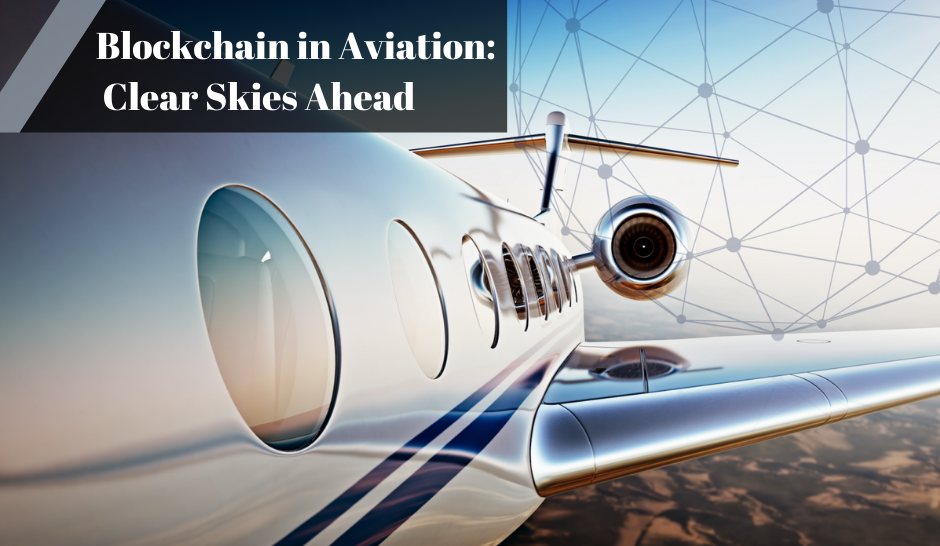


While traveling from one place to another has always been a stressful experience, increased airport check-ins and security at airports have made it even more stressful in the last decade. Very few people prefer traveling by plane because they don’t consider it a safer travel medium. Do you want to travel in a plane that is unsafe and has some severe maintenance issues? Well, your answer to this question would probably be a big ‘NO’. A large proportion of people book flight tickets on the basis of services and reviews of a particular airline company. But what if you could check the aircraft maintenance score along with its ratings and reviews during flight booking? It certainly sounds strange, but it could become possible with the help of the recent technological invention named Blockchain.
Blockchain technology has captured the attention of numerous industries including airlines in the past couple of years. Unlike traditional technologies, Blockchain is shared & mutualized, consistent & durable, and secured & protected at the same time. The major reason for its popularity in the aviation industry is its capability of storing information on a shared digital ledger that can be used for storing information related to the maintenance status of flight schedules, aircraft, and other data. From ticket booking to check-in to onboard processes, the aviation industry has shifted its focus on revolutionizing the flight services after the arrival of Blockchain.
The characteristics of the aviation industry and the broader travel industry align pretty well with the capabilities of the Blockchain. While incredible innovations like Blockchain has helped ample of industries in improving audience engagement and experience, the aviation industry has adopted it to disrupt the flight operations. But the question is: How could the aviation industry cut through the buzz and use this vast technology to change its business structure?
Have a look at some noteworthy reasons for how Blockchain technology can be incorporated in the aviation industry and transform its overall structure. But before moving any further, here are some crucial shortcomings in the current aircraft management system which you need to understand:
Blockchain holds the potential to become a disruptive force that can transform the aviation industry. Doesn’t know how? Continue reading to explore.
Tracking the complex value chain in the airline industry that includes manufacturers, service providers, aircraft accessories, regulatory authorities, component resellers, etc. is a difficult and challenging task. Blockchain provides transparency and auditable records of all the parts & components throughout the supply chain. Moreover, this traceability can also extend to luggage and high-value cargo shipments which are handled by multiple bodies including transportation companies, airports, customers, local authorities, etc. Apart from that, the technology can also be used to track the fitness of various parts of the aircraft by monitoring the data such as manufacturing date, depreciation, and other maintenance-related features.
When a user buys an air ticket, then the airlines have to deal with multiple players involved in the ticketing process. The legacy ticketing system in the current aviation industry comes with the risk of multiple errors which gives rise to a complex web of revenues and payment processes. Today, numerous airline companies rely on IATA (International Airport Transport Association) which acts as a payment clearing house for them. But incorporating Blockchain can streamline and automate these settlement processes while eliminating disputes and simplifying revenue accounting in the airline system. It could also provide the opportunity to create a unified system that uses predefined criteria to solve revenue sharing disputes.
Blockchain development is one of the secured assets in the airline sector which can be used for managing passenger focused information. Forging identities of passengers come with serious threats that include the possibility of terrorist activities on flights or at the airports. Blockchain can use biometrics for identity validation, and once validated, can’t be altered due to the centralized and secure network. Today, many Blockchain applications are emerging to strengthen customer loyalty. For instance, Singapore Airlines has created a customer-focused application that allows them to use frequent-flyer programs for their convenience. Besides, having tickets on Blockchain could potentially support a legal secondary market in tickets, allowing passengers to on-sell tickets.
Whether you are traveling on a train, bus or plane, empty seats always result in loss of revenue in a particular industry. Every airline company follows the practice of overbooking flights as a backup against last-minute ticket cancellations. Due to overbooking, the situation becomes chaotic when passengers are forced to fly under capacity that leaves a bad impression. Therefore, using Blockchain-based features like smart contracts and tokenized ticketing can reduce the instances of overbooking and repetitive booking in a better manner so that none of the parties suffer.
Almost every airline company faces inefficiencies that are caused by fragmentation costs. These difficulties arise because of the cost differences from some additional features such as premium services, upgrades, and customers & operators using loyalty services to save money. Blockchain technology presents an opportunity to streamline such cost efficiencies by providing a unified system. This system could be further used by travel agents, airlines and other players in the industry for booking an entire trip. It not only includes factors such as loyalty programs that directly affect the trip cost but also non-airline related services like hotel accommodation and transportation.
While these were some noteworthy benefits of using Blockchain in the aviation industry, there are many more such as improvement in ground operations, management of customer loyalty programs, airport slot management, interlining and revenue recognition, etc. Today, a multitude of airline companies are using the archaic system to handle various airline operations. This inherited approach of the 1970s isn’t capable enough to facilitate the seamless exchange of data in this complicated ecosystem. Therefore, it’s necessary to implement a decentralized approach like Blockchain to bring effective communication and trust in the system. Blockchain technology has considerable potential in the aviation industry and is expected to boost the airlines industry in the coming future.
Want to know more about Blockchain Tech? We are here to help you. Talk to us to discuss how Blockchain can be integrated into your aviation project. Debut infotech is a leading application development company in the Blockchain space having delivered a sundry of customized Blockchain solutions to clients across various industries, including Real Estate, Healthcare, Travel & Hospitality, Logistics, Manufacturing, and more. Drop a line at info@debutinfotech.com or call us at 1-703-537-5009.

Our Latest Insights
USA

2501 Chatham, Rd Suite R Springfield, IL 62704
+1-708-515-4004
info@debutinfotech.com
UK

7 Pound Close, Yarnton, Oxfordshire, OX51QG
+44-770-304-0079
info@debutinfotech.com
Canada

154 Eden Oak Trail, Kitchener, ON N2A 0H9
+1-708-515-4004
info@debutinfotech.com
INDIA

Sector 101-A, Plot No: I-42, IT City Rd, JLPL Industrial Area, Mohali, PB 140306
9888402396
info@debutinfotech.com

9001:2015
Quality Certified

ISO 27001
Security Certified

A+ Rating
Accredited Business

Certik
Security & Audit


Copyright © 2026, Debut Infotech. All rights reserved. | Privacy Policy