ON THIS PAGE
Progress0%





Our Global Presence :





Web3 wallets serve as the bridge between users and decentralized networks, enabling secure asset custody, seamless interaction with decentralized applications, and control over cryptographic credentials.
As demand for decentralized finance grows, blockchain wallets have surged, with 1.68 billion wallets created globally across networks, including both active and dormant accounts. This expansion reflects broader engagement in on-chain activity and digital ownership.
In early 2025, over 560 million people — about 6.8 % of the world’s population — used Web3 tools and services, highlighting rapid adoption and mainstream interest in decentralized ecosystems. In this guide, we will explain how to build a web3 wallet, its core components, benefits and cost considerations.
A Web3 wallet is a digital tool that allows users to store cryptographic keys and interact directly with blockchain networks. It acts as a gateway to decentralized applications, enabling asset storage, identity verification, and on-chain transactions without relying on intermediaries.
Web3 wallets support public and private key pairs, giving users direct control over their digital assets while maintaining transparency and traceability across supported blockchains.
Web3 wallets use cryptographic keys and seed phrases to allow users to send, receive, and swap tokens. They connect to multiple blockchain networks, giving seamless access to decentralized applications while maintaining security and transparency.
A Web3 wallet is created from a cryptographic seed phrase, typically 12 or 24 words generated by deterministic algorithms. This phrase enables the wallet to regenerate private keys across supported networks, allowing recovery without centralized intervention, provided the user securely stores it.
Web3 wallets enable users to send, receive, and swap digital assets directly on blockchain networks. Each transaction is signed locally using the wallet’s private key, then broadcast to the network. This process ensures asset ownership remains with the user while maintaining transaction transparency and verifiability.
Modern Web3 wallets connect to multiple blockchain networks through node connections or APIs. This allows users to manage assets, interact with smart contracts, and access decentralized applications across different ecosystems without switching tools, creating a unified experience for multi-chain asset management.
Related Read: What is a Web3 Wallet and How Does It Work?
Web3 wallets come in various forms, including custodial, non-custodial, hardware, mobile, and paper wallets.
Each type offers a different balance of security, control, convenience, and suitability for diverse user needs and blockchain interactions.
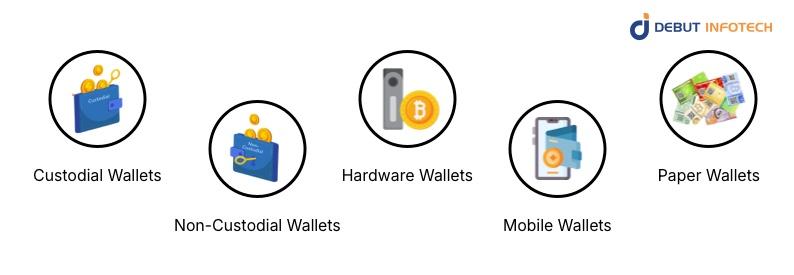
Custodial wallets store users’ private keys on their behalf through a service provider. They simplify onboarding, recovery, and user support, making them suitable for beginners. However, control over assets depends on the provider’s security practices and operational reliability.
Non-custodial Web3 wallets give users complete control over their private keys and funds. All transactions are signed locally, removing reliance on intermediaries. These wallets are commonly used for decentralized finance, NFTs, and governance, though users bear full responsibility for key security.
Hardware wallets store private keys in offline physical devices, isolating them from internet-based threats. Transactions are signed within the device itself, adding an extra security layer. They are widely used for long-term storage and by users prioritizing maximum asset protection.
Mobile wallets are smartphone applications that offer convenience and accessibility. They often integrate biometric authentication, QR code scanning, and dApp browsers. These wallets support frequent transactions and everyday use while balancing usability with standard security measures.
Paper wallets involve recording private keys or seed phrases on physical paper, keeping them completely offline. This method eliminates digital attack vectors but introduces risks related to physical damage, loss, or improper storage, requiring careful handling to remain secure over time.
A Web3 wallet’s functionality relies on key management, transaction handling, blockchain data retrieval, and an intuitive user interface. These components for the crypto wallet builder work together to ensure security, transparency, and smooth interaction with decentralized ecosystems.
A Web3 wallet’s private key management component is responsible for generating, encrypting, storing, and recovering private keys and seed phrases. It ensures cryptographic operations are performed securely, prevents unauthorized access, and supports backup and recovery processes without exposing sensitive credentials to external systems or third-party services.
Blockchain data retrieval enables the white label crypto wallet to fetch balances, transaction histories, token metadata, and smart contract states from blockchain networks. This is achieved through direct node connections or trusted APIs, allowing real-time updates, accurate portfolio views, and reliable interaction with decentralized applications across supported chains.
Transaction management handles the creation, signing, validation, and broadcasting of blockchain transactions. It manages gas estimation, nonce sequencing, network compatibility, and error handling, ensuring transactions are executed correctly, confirmed efficiently, and recorded immutably on the blockchain without exposing private keys during the process or approval flows used.
The user interface acts as the interaction layer between users and blockchain functions. It simplifies complex actions like signing, swapping, and approvals into clear workflows, providing visibility into balances, fees, and risks while improving usability, reducing errors, and encouraging confident, informed participation in decentralized ecosystems and applications.
Developing a Web3 wallet offers full asset ownership, multi-chain access, enhanced security, and scalability. It enables integration with DeFi, NFTs, and governance tools, supporting both user empowerment and long-term strategic positioning in decentralized ecosystems.
Web3 wallet development gives users full ownership of their digital assets by removing reliance on centralized custodians. This approach improves transparency, limits counterparty risk, and aligns with decentralized principles, making the wallet suitable for users who value autonomy, on-chain verification, and direct participation in long-term blockchain-based financial and application ecosystems.
Developing a Web3 wallet enables seamless access to decentralized applications across multiple blockchain networks. Users can engage with DeFi, NFTs, governance, and tokenized assets from a single interface, reducing friction, simplifying interactions, and supporting broader ecosystem participation as decentralized wallet platforms continue to expand and mature across industries and use cases globally over time and adoption cycles ahead.
A custom Web3 wallet strengthens security by keeping private keys under user control, supported by encryption, secure storage, and optional biometric or multi-factor protections. This structure reduces exposure to centralized breaches, enhances trust, and provides a safer foundation for managing high-value digital assets and sensitive on-chain interactions at scale over extended periods of use.
Building a Web3 wallet provides seamless multi-chain support, enabling users to manage assets across different blockchain ecosystems from a single application. This flexibility improves the user experience, supports cross-chain strategies, and prepares the wallet for future network expansion, ensuring relevance as new protocols, layer-two solutions, and interoperability standards gain adoption across the broader blockchain industry landscape over time.
A proprietary Web3 wallet creates opportunities for feature integration, including token swaps, staking, analytics, and dApp wallet integration. These capabilities support product differentiation, strengthen user retention, and open new revenue streams through premium services, integrations, or ecosystem partnerships, while maintaining alignment with decentralized infrastructure and evolving user expectations across blockchain markets worldwide throughout sustained growth cycles.
Developing a Web3 wallet positions an organization to participate in long-term decentralized digital economies. It provides direct insight into user behavior, transaction patterns, and network adoption, supporting informed product decisions, faster innovation, and strategic alignment with emerging blockchain use cases across finance, identity, gaming, and enterprise applications as adoption accelerates steadily across global markets over time.
Creating a Web3 wallet involves defining its type, setting up the development environment, managing keys, retrieving balances, handling transactions, implementing security measures, designing a user interface, thoroughly testing, and deploying for real-world use.
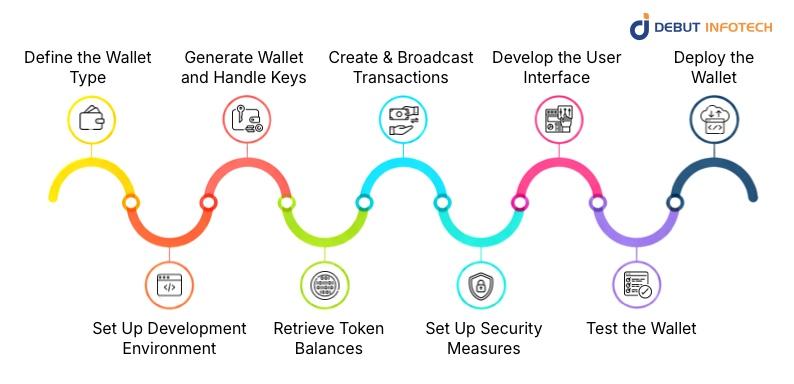
With the help of a reputable crypto development company, begin by identifying the wallet model, whether custodial, non-custodial, mobile, web-based, or hardware-compatible. This choice shapes architecture, compliance scope, security responsibilities, and user experience.
It also determines infrastructure dependencies, recovery mechanisms, and regulatory exposure, helping align technical decisions with business goals, target users, and supported blockchain networks from the outset.
Prepare the development stack by selecting programming languages, frameworks, and blockchain SDKs suited to the target networks.
Configure access to nodes or reliable blockchain APIs. Establish version control, testing environments, and CI pipelines to support secure development, efficient collaboration, and consistent deployment across supported platforms and operating systems.
Implement secure wallet creation using deterministic key generation standards. Create seed phrases, derive private and public keys, and store them securely with encryption. Key handling must remain local to the device whenever possible.
Proper isolation, memory protection, and secure storage practices are critical to preserving user trust and preventing key exposure.
Integrate blockchain queries to retrieve native token balances, token holdings, and transaction histories. This involves interacting with smart contracts, indexing services, or APIs.
Efficient caching and update mechanisms help maintain accuracy while minimizing latency, ensuring users see timely and reliable portfolio information across supported blockchains.
Design transaction workflows that construct, sign, and submit transactions to the blockchain. This includes gas estimation, nonce management, and network-specific parameters.
Transactions must be signed locally using private keys, then broadcast securely, ensuring integrity, transparency, and confirmation tracking without exposing sensitive credentials during execution.
Apply layered security controls, including encryption, secure key storage, biometric authentication, and optional multi-factor access. Conduct threat modeling and implement safeguards against phishing, malware, and unauthorized access.
Regular security audits and updates strengthen resilience, ensuring the wallet remains trustworthy as attack vectors and blockchain protocols evolve.
Create a user interface that simplifies complex blockchain interactions into clear, guided actions. The design should present balances, fees, approvals, and risks transparently. Accessibility, responsiveness, and consistency across devices are essential to building confidence and encouraging continued use among both new and experienced Web3 users.
Conduct comprehensive testing across functionality, security, and performance. Validate key recovery flows, transaction handling, and network compatibility. Testing should cover multiple devices and blockchain environments, including edge cases, to ensure reliability and stability before public deployment or integration with live blockchain networks.
Release the wallet on intended platforms, such as web, mobile app stores, or browser extensions. Monitor performance, user behavior, and error logs post-launch. Ongoing updates and maintenance ensure compatibility with network upgrades, evolving standards, and user expectations as the Web3 ecosystem continues to mature.
Developing a Web3 wallet involves costs for development, API integration, security audits, and ongoing maintenance. Proper budgeting ensures secure, efficient, and scalable wallet operations while supporting growth and multi-chain compatibility.
Development costs include engineering resources, UI and UX design, blockchain integrations, testing, and project management. Expenses vary based on wallet complexity, supported networks, feature depth, and platform coverage, making early scoping and phased delivery necessary for crypto wallet development cost control and predictable budgeting.
API costs arise from using blockchain data providers, node services, and indexing platforms. Fees are often usage-based and increase with transaction volume, multi-chain support, and real-time data needs, requiring careful provider selection and monitoring to balance performance, reliability, and operational expenses.
Security costs cover code audits, penetration testing, compliance reviews, and ongoing vulnerability assessments. These investments are essential for protecting user assets and maintaining credibility.
Strong security spending reduces long-term risk, liability exposure, and reputational damage associated with breaches or compromised wallet infrastructure.
Maintenance costs include ongoing updates, bug fixes, protocol upgrades, customer support, and performance monitoring. As blockchain networks evolve, wallets require regular adjustments to remain compatible, secure, and user-friendly, making long-term operational planning a critical part of sustainable wallet development.
Debut Infotech offers comprehensive crypto wallet development services. We excel in designing and delivering robust Web3 wallet solutions that prioritize security, usability, and scalability. Our wallets support multi-chain access, efficient transaction handling, and advanced key management, ensuring users maintain full control of their assets.
By combining intuitive interfaces with cutting-edge cryptographic standards, we empower both individual users and enterprises to engage confidently with decentralized applications. Businesses looking to build Web3 wallet can rely on our expertise to create secure, future-ready blockchain solutions.
Developing a Web3 wallet requires careful planning across wallet types, key management, transaction processing, and user interface design. Each component directly impacts security, usability, and multi-chain compatibility. Understanding these elements allows developers and organizations to deliver wallets that are reliable and user-friendly.
By choosing to build a Web3 wallet, teams can facilitate decentralized access, secure asset control, and scalable solutions that adapt to growing blockchain ecosystems, ensuring long-term functionality and widespread adoption.
A. To create Web3 wallet, you can start by defining the wallet type: custodial or non-custodial. Then choose a blockchain, set up key generation, and build transaction signing. Most teams use existing SDKs instead of starting from zero, then add a clean UI, security layers, and dApp connectivity with testing and audits.
A. JavaScript and TypeScript dominate Web3 wallet development, primarily due to robust blockchain libraries. Rust is popular for Solana-based wallets. Swift and Kotlin matter for mobile apps. Backend services often use Node.js or Go for performance and reliability. Security tooling and audits shape language choices too.
A. Yes, multi-chain wallets are common. You use separate RPC providers and SDKs for each network, then unify them into a single interface. Careful handling of gas fees, token standards, and transaction formats keeps the user experience smooth across supported chains without confusing balance views.
A. Costs vary based on features, platforms, and security depth. A basic Web3 wallet can start around $20,000. Multi-chain support, mobile apps, audits, and custom UI push costs higher. Ongoing maintenance, updates, and compliance work also add long-term expenses. Budgets scale fast as usage grows.
A. Regulation depends on custody, geography, and features. Non-custodial wallets face fewer rules, while custodial wallets may trigger KYC and AML requirements. You also need to consider data protection laws, sanctions compliance, and evolving crypto regulations in target markets. Legal advice helps avoid expensive mistakes later.
A. Yes, there are solid open source tools for building a Web3 wallet. Popular options include libraries like web3.js, ethers.js, and WalletConnect for connectivity. Many teams also rely on open source wallet SDKs and blockchain clients, then customize security, UI, and chain support around them.

Our Latest Insights
USA

2501 Chatham, Rd Suite R Springfield, IL 62704
+1-708-515-4004
info@debutinfotech.com
UK

7 Pound Close, Yarnton, Oxfordshire, OX51QG
+44-770-304-0079
info@debutinfotech.com
Canada

154 Eden Oak Trail, Kitchener, ON N2A 0H9
+1-708-515-4004
info@debutinfotech.com
INDIA

Sector 101-A, Plot No: I-42, IT City Rd, JLPL Industrial Area, Mohali, PB 140306
9888402396
info@debutinfotech.com