ON THIS PAGE
Progress0%






Our Global Presence :





As of 2025, fewer than half of cryptocurrencies held on exchanges are verified with Proof-of-Reserves: just 47.3% of all Bitcoin on exchanges has undergone public reserve verification. This exposes significant transparency gaps in a volatile market.
In addition, among top-tier platforms, adoption of Proof-of-Reserves has grown sharply: exchanges rated “AA”, “A” or “BB” now adopt PoR universally, according to an industry benchmark.
Proof-of-Reserves provides a cryptographic mechanism to demonstrate that a platform holds sufficient assets to cover all user balances. That verification, combined with structured audits and public reporting, builds confidence in solvency and reduces the chances of hidden insolvencies.
This article guides you through how PoR works, its components, benefits, limitations, real-world applications, and what to watch out for.
Proof of Reserves (PoR) is a cryptographic method used by cryptocurrency exchanges and custodial platforms to publicly verify that they hold enough on-chain assets to fully back user balances. It allows platforms to demonstrate financial solvency in a transparent, verifiable manner without revealing sensitive user or business information.
Through mechanisms like Merkle trees and on-chain wallet verification, Proof of Reserves enables users and third parties to independently confirm that deposited funds are securely held and not misused. In simple terms, it provides mathematical proof that a platform’s reserves match or exceed what users are owed, helping build trust and accountability in digital asset custody.
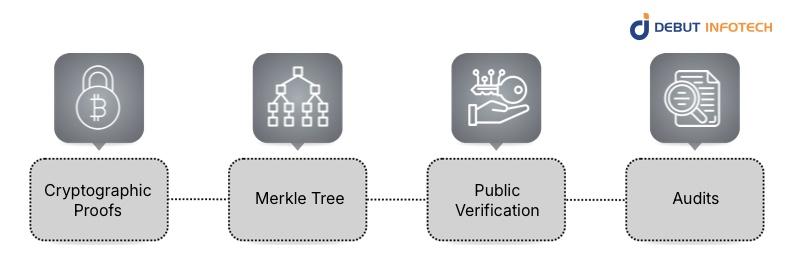
Cryptographic proofs confirm reserve holdings through mathematical verification rather than manual inspection. Exchanges generate hashed balance data that auditors can verify without exposing personal details. This method protects user privacy while keeping the verification process tamper-resistant. It strengthens trust by relying on objective, transparent evidence rather than internal claims.
A Merkle tree structures user balance data into hashed layers that merge into a single verifiable root. Each user receives a hash tied to their balance, allowing them to confirm inclusion without revealing private information. This setup ensures the entire dataset remains intact and traceable, enhancing audit reliability.
Public verification lets users check whether their balances were included in the audit by comparing their hashed record with the published Merkle root. This system offers individual validation without exposing identities. It empowers users to confirm transparency directly, reducing uncertainty during volatile market events or industry disruptions.
Audits involve independent professionals reviewing wallet balances, verifying liabilities, and confirming that all cryptographic proofs were created accurately. They inspect cold and hot wallets, confirm control of addresses, and ensure no manipulation occurred during data preparation. This process gives users confidence that the published PoR reflects genuine financial stability.
Assets refer to all cryptocurrencies that an exchange controls across hot and cold wallets. These holdings must be independently verified to confirm they match or exceed user balances. Proper accounting includes verifying wallet ownership, validating access, and ensuring there are no hidden encumbrances. Accurate asset reporting forms the backbone of any legitimate Proof-of-Reserves verification model.
Liabilities represent the combined balances owed to all users on the platform. Exchanges calculate these amounts from internal records and convert them into hashed entries for PoR verification. Reliable liability reporting ensures every user’s balance is captured accurately. Any mismatch between user claims and recorded liabilities can undermine trust, making precise data essential.
Solvency measures whether an exchange holds enough verified assets to cover all customer withdrawals at any given time. The proof of reserves list confirms solvency by comparing on-chain asset proofs with audited liabilities. When assets exceed liabilities, users gain confidence in the platform’s operational stability. This indicator helps protect customers from hidden shortfalls and potential liquidity failures.
Crypto proof of reserves helps rebuild confidence after years of failures and mismanaged exchanges. It provides users with verifiable evidence that a platform has sufficient assets to cover all balances. This structure reduces doubt, supports safer participation, and reassures both new and experienced users that the exchange is financially stable rather than relying on unsupported assurances.
PoR allows an exchange like Chainlink proof of reserve to present a clear snapshot of its actual backing. The ability to prove asset control and match liabilities communicates discipline and operational strength. Blockchain platforms that commit to open verification show a willingness to be held accountable. This level of transparency signals healthier internal processes and a stronger, more reliable financial foundation.
An exchange willing to publish PoR demonstrates a commitment to openness that aligns with broader expectations for responsible operations. This readiness encourages a culture where verifiable data replaces uncertainty. It also signals long-term planning by showing the enterprise blockchain platform intends to maintain trustworthy practices that support users, regulators, and partners who require consistent transparency.
PoR (I.e., river proof of reserves) gives individuals a direct way to confirm their balances without relying solely on the platform’s trustworthiness. Users can match their hashed entries against the published Merkle root to verify inclusion. This hands-on approach supports personal assurance, reduces fear during market stress, and creates a healthier environment where every participant can validate their own financial position.
During volatile periods, rumors and uncertainty often trigger mass withdrawals. PoR, like Coinbase proof of reserves, provides verifiable evidence of solvency that helps reduce these reactions.
When users can see that assets exceed liabilities, they are less likely to react impulsively. This stability protects both the exchange and its customers from unnecessary financial disruption or liquidity strain during unpredictable market swings.
Platforms that adopt PoR often stand out in a crowded market. Users tend to prefer exchanges that provide open, verifiable information rather than opaque claims. This competitive edge attracts more responsible participants, strengthens brand positioning, and encourages other industry participants to raise their standards. Over time, this raises expectations for better transparency across the ecosystem.
PoR acts as a safeguard for investors by revealing whether an exchange manages user funds responsibly. It reduces the likelihood of hidden shortfalls, unbacked liabilities, or misappropriated assets.
When investors can easily confirm the platform’s solvency, they operate with more confidence. This creates a safer environment and lowers the risk of sudden, unexpected losses.
PoR only reflects the moment the audit was completed, meaning conditions may change shortly afterward. An exchange could appear fully backed during the check yet face issues later if funds move or obligations shift. This timing limitation makes PoR useful but insufficient as a stand-alone measure of ongoing stability.
PoR validates balances but doesn’t reveal broader operational risks such as debts, internal controls, or off-chain liabilities. It verifies assets and user claims but cannot expose management behavior or hidden obligations. This narrow focus means PoR should be paired with stronger oversight and continuous monitoring for a more complete picture.
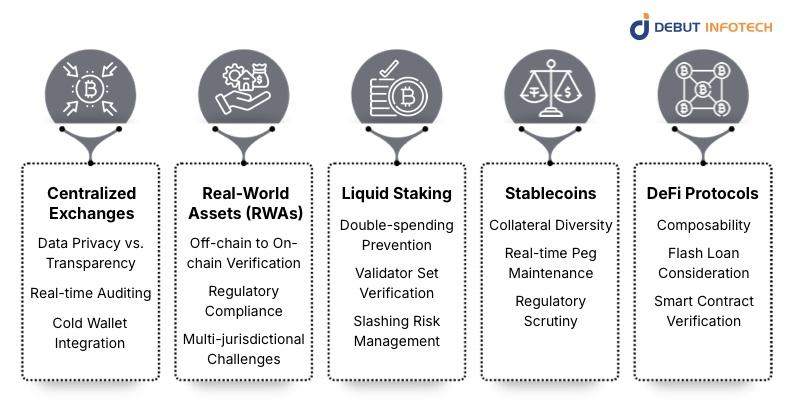
Centralized exchanges rely heavily on user trust, and PoR gives them a structured way to demonstrate responsible asset management. These checks help users assess a platform’s strength and understand how well it protects client balances across different storage systems.
Balancing transparency with user privacy is a major challenge for CEXs. PoR solves this by using hashed data, allowing reserves to be verified without exposing personal details. This method reassures users that their information stays protected while still receiving verifiable proof that the exchange maintains accurate and reliable balance records.
Real-time or frequent PoR updates keep users informed about the platform’s current solvency, rather than relying on outdated figures. This approach minimizes uncertainty, especially during market volatility. Continuous visibility helps users make better decisions and encourages proof of reserves crypto exchanges to maintain stronger internal controls to preserve consistent backing for all assets.
Cold wallets often store long-term reserves, and integrating them into PoR ensures users see the complete asset picture. Including these offline holdings verifies that the exchange has substantial backing beyond operational hot wallets. This transparency strengthens user trust by showing that reserves remain safe, accessible, and independently verifiable.
Tokenized real-world assets introduce off-chain value into blockchain technology systems. PoR helps bridge the gap by confirming that the physical or financial assets backing these tokens remain legitimate, accounted for, and consistent with users’ expectations.
Turning physical assets into digital tokens requires proof that the real objects still exist and remain properly held. PoR helps validate this connection by confirming that each token corresponds to a verified off-chain asset. This reduces doubt and strengthens confidence in tokenized products backed by external items or financial instruments.
RWAs often fall under various regional rules, and PoR helps platforms align their tokenized models with regulatory obligations. Verified reserve reports help satisfy auditors and authorities who require transparent backing. This approach promotes legal compliance and supports smoother operation across markets with different reporting requirements.
Managing reserves across several countries introduces complications regarding verification, documentation, and oversight. PoR provides a unified method for presenting solvency across borders, even when local regulations differ. This consistency helps platforms maintain credibility and ensures that international users receive clear, reliable information about reserve status.
Liquid staking allows users to stake assets while receiving a tradeable token in return. PoR helps validate that these tokens remain supported by genuine staked assets, reducing uncertainty about duplication or mismanagement.
Liquid staking systems must ensure that each staked asset only supports one liquid token. PoR helps confirm this by verifying that no duplicate claims exist on the same funds. This prevents inflation of token supply and protects users from systems that might unknowingly issue unbacked or improperly tracked tokens.
Staked assets rely on validators to secure the network. PoR helps users confirm that these validators genuinely receive and manage the staked funds backing liquid tokens. Clear reporting reduces guesswork and gives users confidence that the protocol aligns validator activity with the actual assets locked in the system.
Liquid staking introduces slashing risks when validators misbehave. PoR clarifies how much exposure the protocol has to these penalties by verifying staked amounts and validator assignments. This helps users assess potential losses and understand whether the system maintains adequate safeguards against validator mistakes or network-level security breaches.
Stablecoins rely on dependable reserves to maintain their value. PoR offers a transparent way to confirm that these reserves exist and match the circulation supply.
Stablecoin issuers often support their tokens with multiple asset types. PoR reviews this collateral mix to confirm it can reliably maintain the token’s value. Understanding reserve composition helps users assess a coin’s stability and determine whether it can withstand rapid changes in market conditions.
Stablecoins function effectively only when their reserves support the peg continuously. PoR allows issuers to present verifiable evidence that backing remains intact throughout market shifts. This reduces user uncertainty, lowers the risk of depegging, and helps maintain stable day-to-day performance across various trading environments.
Because stablecoins interact closely with traditional finance, regulators expect strong oversight. PoR helps issuers demonstrate responsible reserve management by providing clear, verifiable evidence of backing. This improves relationships with authorities, supports licensing efforts, and reduces concerns that stablecoins may mint tokens without appropriate collateral.
Decentralized finance relies on transparent, composable systems where assets must remain verifiable at all times. PoR enhances this reliability and supports safer interactions across blockchain ecosystem protocols.
DeFi protocols depend on assets moving smoothly between different platforms. PoR ensures that the reserves backing these interactions are authentic and accessible. This strengthens confidence in cross-protocol operations and decreases risk for users relying on interconnected tools that share liquidity, collateral, or tokenized positions across multiple systems.
Flash loans can distort temporary balances and mislead auditors if not accounted for properly. PoR frameworks need safeguards that detect artificial inflation created during audits. This prevents manipulation and ensures the final reserve snapshot reflects genuine holdings rather than balances inflated by rapid, temporary borrowing.
Smart contracts determine how reserves are handled within DeFi systems. PoR complements this by verifying that the reserves match what the contract logic expects. This helps users trust that the protocol performs its functions correctly, prevents misreporting of collateral, and keeps assets aligned with the system’s programmed rules.
When an exchange avoids independent audits, it creates uncertainty around the accuracy of its reported reserves. External auditors help confirm wallet ownership, check liabilities, and validate cryptographic proofs. Without this oversight, users cannot rely on the platform’s claims. A missing proof of reservation audit trail often signals weak internal controls or an unwillingness to allow third-party review.
A trustworthy PoR process should clearly explain how data was collected, how wallets were verified, which hashing techniques were used, and how liabilities were calculated. Vague explanations or missing documentation reduce confidence in the results.
When the methodology lacks detail, users cannot understand what was checked or how the reserve information was validated, making the entire report less credible.
Heavy reliance on centralized systems can weaken PoR reliability. If a single entity controls wallets, data generation, and verification steps, the process becomes vulnerable to manipulation. Strong PoR frameworks distribute responsibilities, use open verification tools, and limit internal influence. Excessive centralization suggests limited transparency and raises concerns about whether the published reserve information reflects real, independent validation.
Debut Infotech is a top enterprise blockchain development company that delivers tailored blockchain solutions that help exchanges and financial platforms implement dependable Proof-of-Reserves systems. Our team focuses on secure architecture, accurate wallet verification, and clear reporting structures that support long-term trust.
Our experience with CEXs, DeFi platforms, and asset-backed projects makes us a strong partner for organizations aiming to build transparent, verifiable systems that align with modern expectations for responsible digital asset management and future-ready compliance standards.
A. Proof-of-Reserves only shows what an exchange holds at one moment. It doesn’t show debts, off-chain liabilities, or how the exchange manages its funds day to day. So even with a clean report, you still don’t get the full financial picture behind the scenes.
A. Bybit Proof-of-Reserves report confirms that customer assets are fully backed and stored in the exchange’s wallets. It shows users that their account balances match what Bybit publicly displays. It doesn’t replace a full audit, but it helps users see real, live asset backing.
A. Most Proof-of-Reserves audits cover major cryptocurrencies held for users. That usually includes assets like Bitcoin, Ethereum, stablecoins, and other high-volume tokens. Some exchanges list everything they custody, while others stick to the top assets people trade daily. It depends on each platform’s approach to transparency.
A. Exchanges that support verification usually give you a unique code or “Merkle proof” to check your balance in their audit tree. You match that with what’s shown in the public report. If the numbers line up, it confirms your funds are part of the verified reserves.
A. A reliable exchange should publish Proof-of-Reserves updates regularly enough that users aren’t left to guess. Monthly or quarterly checks are the common rhythm. The point is consistency, so customers know reserves aren’t only healthy on the day the audit happens.
A. Proof-of-Reserve for USDT checks whether the issuer or platform actually holds the assets backing the USDT in circulation. It’s a way to confirm the stablecoin is adequately supported by real reserves, letting users see that the tokens they hold aren’t backed by empty promises.
A. Most platforms break reserves into a few simple buckets. You’ll usually see cash or cash equivalents, crypto assets held for users, and other liquid holdings that can be verified. The exact mix depends on the exchange or issuer, but the goal is clear: trackable backing.

Our Latest Insights
USA

2501 Chatham, Rd Suite R Springfield, IL 62704
+1-708-515-4004
info@debutinfotech.com
UK

7 Pound Close, Yarnton, Oxfordshire, OX51QG
+44-770-304-0079
info@debutinfotech.com
Canada

154 Eden Oak Trail, Kitchener, ON N2A 0H9
+1-708-515-4004
info@debutinfotech.com
INDIA

Sector 101-A, Plot No: I-42, IT City Rd, JLPL Industrial Area, Mohali, PB 140306
9888402396
info@debutinfotech.com