
Table of Contents
Our Global Presence :


Home / Blog / Cryptocurrency
What Are Crypto On-Ramps and Off-Ramps? A Complete Beginner’s Guide

by

January 13, 2026

by
January 13, 2026
Crypto on-ramps and off-ramps play a foundational role in how people enter and exit the digital asset ecosystem. For beginners, understanding how traditional money is connected to cryptocurrencies is often the first major hurdle. Without these systems, buying or converting crypto would be complex, slow, and inaccessible for most users. This guide explains how these mechanisms work and why they are important.
As adoption grows, businesses and users increasingly rely on smooth fiat-to-crypto and crypto-to-fiat conversions. From individual investors to enterprises building blockchain-powered platforms, on-ramp and off-ramp infrastructure enables real-world usability. In this article, we walk through the concept step by step, explaining what on-ramps and off-ramps are, how they work, where they fit into wallets and payment systems, and how companies like Debut Infotech help build reliable crypto access solutions.
Looking to integrate crypto on-ramps and off-ramps into your platform?
Build secure, scalable systems that let users move seamlessly between fiat and crypto without friction.
Understanding the Basics of Crypto On-Ramps and Off-Ramps
Before diving into platforms and use cases, it helps to understand what these terms actually mean in crypto.
Crypto on/off ramps refer to systems that enable the conversion of digital assets between traditional currencies and cryptocurrencies. An on-ramp crypto solution facilitates the transfer of money from fiat to crypto. A crypto off ramp moves value in the opposite direction, allowing users to cash out.
Together, these systems allow crypto to function beyond speculation. They make digital assets usable, spendable, and accessible in everyday financial activity.
What Does On-Ramp Mean in Crypto?
When people ask what does on ramp mean in crypto, they are asking how traditional money enters the blockchain ecosystem.
An on-ramp crypto service enables users to buy cryptocurrency using fiat currency such as dollars, euros, or local bank transfers. These systems sit between banks, payment processors, and blockchain networks. They handle identity checks, payment processing, and asset delivery so users do not have to interact directly with complex blockchain infrastructure.
For beginners, on-ramps remove friction. Instead of learning private keys or smart contracts first, users can focus on acquiring digital assets through familiar payment methods.
What Is a Crypto Off-Ramp?
A crypto off ramp allows users to convert cryptocurrency back into fiat currency. This process is commonly referred to as Crypto to fiat conversion.
Off ramp crypto systems are essential for liquidity. They enable users to realize profits, pay expenses, or move funds back into traditional financial accounts. Without reliable off-ramps, crypto would remain locked within the blockchain ecosystem, limiting its real-world usefulness.
Choosing the best way to off ramp crypto often depends on speed, fees, compliance, and regional banking access.
How Crypto On-Ramps and Off-Ramps Work Together
On-ramps and off-ramps are two sides of the same system. Together, they form what is often referred to as crypto on/off ramps.
The On Ramp and Off Ramp Flow
A typical on ramp and off ramp process follows a simple cycle:
- Fiat enters the system through an on-ramp
- Digital assets are stored or used within wallets and applications
- Crypto exits the system through an off-ramp when needed
This seamless movement of value enables trading, payments, and long-term investment.
What is Digital Asset Conversion
Digital asset conversion refers to the process of changing value between fiat and crypto. Whether it is Fiat to crypto or Crypto to fiat, the underlying goal is accessibility. On-ramps and off-ramps handle compliance, pricing, and settlement, allowing users to focus on usage rather than infrastructure.
Types of Crypto On-Ramp and Off-Ramp Platforms
Not all crypto on-ramp and off-ramp platforms operate the same way. Understanding the differences helps users and businesses select the most suitable model.
Centralized On-Ramp and Off-Ramp Platforms
Centralized platforms act as intermediaries between users and the blockchain. They often integrate directly with banks and payment processors.
A centralized wallet is typically managed by a platform that controls private keys on behalf of users. These wallets simplify onboarding and recovery, making them popular for beginners. Many crypto on-ramp and off-ramp platforms rely on centralized wallet systems to streamline transactions and compliance.
Decentralized On-Ramp and Off-Ramp Solutions
Decentralized alternatives focus on user control and privacy.
A decentralized wallet gives users full ownership of their private keys. While this improves security and autonomy, integrating on-ramp crypto and off-ramp crypto functionality into decentralized systems requires more advanced infrastructure.
How to On-Ramp Crypto: Step-by-Step Overview
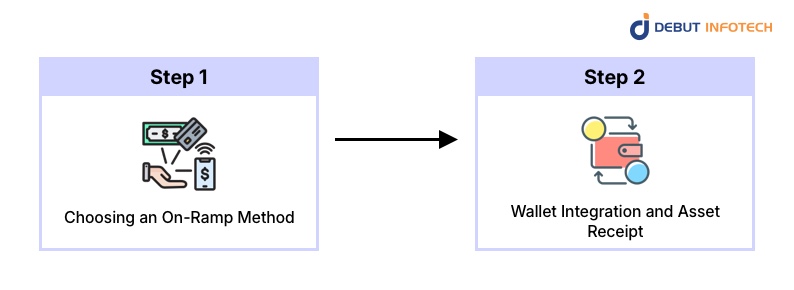
For new users, understanding how to on-ramp crypto removes much of the uncertainty around getting started. While the technology behind crypto may seem complex, the actual on-ramping process is designed to feel familiar, often mirroring traditional online payments. Most platforms guide users through a few clear steps that prioritize speed, security, and ease of use.
Choosing an On-Ramp Method
The first step in the on-ramp process is selecting the payment method. Users typically choose between bank transfers, debit or credit cards, and region-specific payment systems. Each option comes with trade-offs. Bank transfers usually offer lower fees but may take longer to settle, while card payments provide faster access at a higher cost. Local payment rails can offer a balance between convenience and affordability, depending on availability.
Selecting the best on ramp crypto option depends on personal priorities. Users focused on speed may prefer instant payment methods, while those making larger purchases often seek lower fees and higher transaction limits. Regional support also plays a major role, as not all payment methods are available everywhere.
Wallet Integration and Asset Receipt
Once the payment is approved, the purchased cryptocurrency is delivered to a wallet. This wallet can either be a centralized wallet managed by the on-ramp platform or a decentralized wallet connected externally by the user. Centralized wallets offer simplicity and easier account recovery, making them appealing to beginners.
Decentralized wallets, on the other hand, give users full control over their assets. In this setup, the on-ramp sends crypto directly to the user’s wallet address. While this approach requires more responsibility, it aligns with the self-custody principles many crypto users value.
How Crypto Off-Ramps Work in Practice
Off-ramping is just as important as buying cryptocurrency, especially for users who want flexibility in accessing their funds. A smooth off-ramp process ensures that digital assets can be converted into usable money without unnecessary delays or complications.
Converting Crypto to Fiat
Crypto-to-fiat conversion typically begins when a user initiates a sell request through an off-ramp platform. The digital assets are exchanged at current market rates, and the equivalent fiat amount is prepared for withdrawal. Depending on the platform, this may happen instantly or after a short settlement period.
Once the conversion is complete, funds are transferred to a bank account or another supported payout method. Choosing the best way to off-ramp crypto often depends on how quickly users need access to their money and how much they are willing to pay in fees.
Related Read – What Are The Latest Trends In Cryptocurrency Wallet Development?
Selecting the Best Off-Ramp for Crypto
The best off-ramp for crypto balances several factors. Liquidity ensures that large transactions can be processed without price slippage. Compliance protects users by ensuring withdrawals meet regulatory standards. User experience determines how simple and transparent the process feels.
Some platforms prioritize instant payouts for convenience, while others focus on offering lower fees to users who are willing to wait longer. The right choice depends on individual needs, transaction size, and the level of regional banking support.
The Role of Crypto Wallets in On-Ramps and Off-Ramps
Crypto wallets play a central role in how on-ramps and off-ramps function, acting as the bridge between users and blockchain networks. The best crypto wallets support seamless crypto on/off ramps by offering secure asset storage, clear transaction history, and easy connectivity with payment systems. These features ensure that users can move funds in and out of crypto without unnecessary friction.
For businesses, white label crypto wallet solutions provide a practical way to embed on-ramp and off-ramp functionality directly into their platforms. This approach accelerates deployment, allows for full branding control, and creates a unified user experience without requiring the building of wallet infrastructure from scratch.
Payment systems further strengthen this flow. A crypto payment gateway enables businesses to accept digital assets while facilitating seamless conversion between fiat and cryptocurrency. When combined with on-ramps and off-ramps, payment gateway crypto integrations allow merchants to receive crypto payments and settle in fiat, or handle conversions automatically based on operational needs.
Business Use Cases for Crypto On-Ramps and Off-Ramps
Businesses rely on crypto on-ramps and off-ramps to support real-world operations across multiple use cases. In consumer-facing products, on-ramp crypto functionality is commonly integrated into eWallet app development to allow users to fund accounts directly with fiat. This simplifies onboarding, reduces friction at signup, and improves long-term user retention by making crypto access immediate.
For enterprise operations, crypto off ramp solutions play a key role in liquidity management. Companies use off-ramps to convert digital assets into fiat for payroll, vendor payments, treasury management, and revenue settlement. Efficient off-ramping reduces exposure to volatility, ensures predictable cash flow, and minimizes operational risk when handling crypto at scale.
Compliance, Security, and Trust Considerations
Compliance, security, and trust are critical to the long-term success of crypto on-ramps and off-ramps. Without strong safeguards, even the most advanced platforms struggle to gain user confidence or scale responsibly.
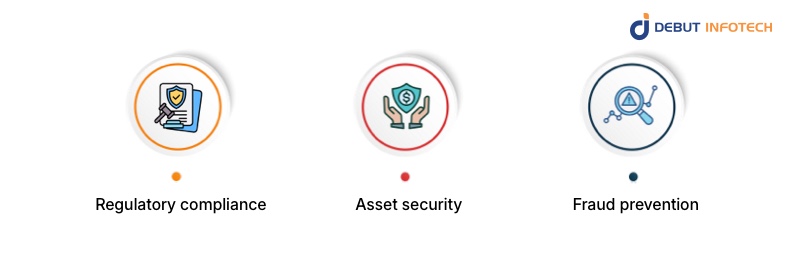
Key considerations include:
- Regulatory compliance: Fiat-to-crypto systems must meet local financial and licensing requirements. On-ramp and off-ramp providers typically manage identity verification, transaction monitoring, and reporting to ensure legal operation across jurisdictions.
- Asset security: Secure custody models, strong encryption, and access controls protect user funds. Whether assets are held in a centralized wallet or a decentralized wallet, security architecture plays a direct role in platform credibility.
- Fraud prevention: Ongoing risk monitoring and transaction analysis help detect suspicious activity early, reducing exposure to fraud and financial loss.
Together, these measures establish trust, protect users, and support sustainable growth across crypto platforms.
Building On-Ramp and Off-Ramp Solutions for Businesses
Many businesses choose to build custom on-ramp and off-ramp infrastructure rather than relying entirely on third-party platforms. This approach offers greater control over user experience, compliance, and transaction costs. Custom solutions also facilitate easier adaptation to regional regulations, support specific fiat currencies, and integrate seamlessly with existing products.
Working with an experienced crypto development company allows organizations to design scalable on-ramp and off-ramp systems tailored to their operational needs. These systems can be optimized for various industries, user volumes, and payment methods, ensuring reliable fiat-to-crypto and crypto-to-fiat movement as the platform grows.
Crypto wallet development services play a central role in this process. Modern wallets are often built with on-ramp and off-ramp functionality integrated from the outset, enabling users to enter and exit the crypto ecosystem with minimal steps. This unified approach enhances usability, strengthens security, and fosters a more cohesive product experience for both businesses and end-users.
Cost Factors in On-Ramp and Off-Ramp Development
Understanding cost is essential for businesses planning to integrate crypto on-ramps and off-ramps into their platforms. Development expenses vary based on feature scope, security requirements, regulatory compliance, and the level of customization involved. Wallet architecture, payment integrations, and regional support all influence overall cost.
Crypto wallet development cost increases when on-ramp and off-ramp functionality is added, as these systems require additional infrastructure for payments, liquidity management, and compliance. While this raises initial investment, it also significantly enhances platform capability by enabling seamless movement between Fiat and crypto, as well as crypto and Fiat.
Over the long term, owning on-ramp and off-ramp infrastructure often delivers strong returns. Businesses reduce reliance on third-party providers, gain more control over fees and user experience, and improve scalability as transaction volumes grow.
Market Trends and Industry Adoption
Crypto on-ramps and off-ramps are quickly becoming standard components of modern blockchain platforms. As user expectations evolve, seamless digital asset conversion is no longer optional but a core requirement for adoption.
Top cryptocurrency companies continue to invest in improving onboarding and exit experiences, recognizing that easy entry and withdrawal directly impact user growth and retention. Platforms that simplify these processes gain a competitive edge by reducing friction and increasing trust.
Looking ahead, crypto on-ramp and off-ramp platforms are expected to become faster, more transparent, and more globally accessible. As regulatory frameworks mature and infrastructure improves, these systems will play an increasingly significant role in expanding the real-world applications of cryptocurrency.
How Debut Infotech Helps Build Crypto Access Infrastructure
At Debut Infotech, we specialize in developing secure and scalable blockchain solutions that facilitate the adoption of cryptocurrencies. Our experience spans wallet development, payment integrations, and enterprise-grade infrastructure.
We work closely with businesses to design on-ramp and off-ramp systems that align with regulatory requirements and user expectations. Whether you need a white label crypto wallet or a full payment gateway crypto solution, Debut Infotech delivers tailored results.
Read more – Top Use Cases for Crypto Wallet Development in 2026
Benefits of Reliable Crypto On-Ramps and Off-Ramps
Reliable infrastructure unlocks real-world value.
- Improved Accessibility: On-ramps lower the barrier to entry for new users, while off-ramps ensure liquidity and usability.
- Enhanced Trust and Adoption: When users can easily move between fiat and crypto, confidence grows, and adoption accelerates.
Need a custom crypto wallet or payment infrastructure for your business?
Work with experts to design compliant, future-ready on-ramp and off-ramp solutions tailored to your market.
Conclusion
Crypto on-ramps and off-ramps form the backbone of the digital asset economy. They connect traditional finance with blockchain networks, enabling conversions between fiat and crypto at scale. Without them, crypto would remain isolated and impractical for everyday use.
As businesses and users continue to adopt digital assets, the importance of secure, compliant, and user-friendly on-ramp and off-ramp systems will only increase. By partnering with experienced providers like Debut Infotech, organizations can build future-ready platforms that support seamless digital asset conversion and long-term growth.
Frequently Asked Questions
Q. How long does it take to on-ramp crypto?
A. The time required to on-ramp crypto depends on the payment method used. Card payments are often processed within minutes, while bank transfers may take several hours or even days. Verification requirements and regional banking systems can also affect timing.
Q. Are fees the same across all crypto on-ramp platforms?
A. No. Fees vary based on the platform, payment method, and transaction size. Card-based on ramp crypto services usually have higher fees, while bank transfers are often cheaper. Exchange rates and processing costs also influence the final amount received.
Q. Can I on-ramp crypto directly into my own wallet?
A. Yes. Many platforms allow users to send purchased crypto directly to a decentralized wallet they control. Others deliver funds to a centralized wallet first, especially for beginners who want a simpler setup.
Q. What is a crypto to fiat off-ramp?
A. A crypto to fiat off-ramp is a service that converts digital assets into traditional currency and transfers the funds to a bank account or payment service. It enables users to move value out of the crypto ecosystem and into everyday financial systems.
Q. What factors should I consider when choosing an off ramp crypto service?
A. Key factors include withdrawal speed, fees, liquidity, regulatory compliance, and supported payout methods. The best off ramp for crypto is usually the one that fits your transaction size and local banking access.
Q. Are crypto on/off ramps available worldwide?
A. Availability varies by country. Some crypto on-ramp and off-ramp platforms support only specific regions due to banking partnerships and regulations. Users should always check whether their local currency and payment methods are supported.
Q. Do businesses need both on-ramps and off-ramps?
A. Yes. Businesses that accept, hold, or distribute crypto typically need both systems. On-ramps allow customers to enter the ecosystem, while off-ramps provide liquidity and operational flexibility for payouts, settlements, and revenue conversion.
Talk With Our Expert
Our Latest Insights


USA
Debut Infotech Global Services LLC
2102 Linden LN, Palatine, IL 60067
+1-708-515-4004
info@debutinfotech.com
UK
Debut Infotech Pvt Ltd
7 Pound Close, Yarnton, Oxfordshire, OX51QG
+44-770-304-0079
info@debutinfotech.com
Canada
Debut Infotech Pvt Ltd
326 Parkvale Drive, Kitchener, ON N2R1Y7
+1-708-515-4004
info@debutinfotech.com
INDIA
Debut Infotech Pvt Ltd
Sector 101-A, Plot No: I-42, IT City Rd, JLPL Industrial Area, Mohali, PB 140306
9888402396
info@debutinfotech.com
Leave a Comment